
Showing posts with label posted by Jane. Show all posts
Showing posts with label posted by Jane. Show all posts
Saturday, April 19, 2014

Monday, April 14, 2014
Wordsworth and Awe Final Draft
Here's a link to the final draft of my final English paper. It's 69 words over my venue's limit. It's about Wordsworth and Awe.
Saturday, April 5, 2014
Memoirs + Social Proof
I got in touch with Lisa Roylance and she sent me a copy of the paper she presented at the recent BYU English Symposium titled "The Importance of Memory Holes in Memoir." Not only will the paper itself be a great resource, but Lisa will also be great to bounce ideas off of and take advice from. Her paper is very interesting, and her list of references has a lot of sources that I think I may end up using in my final paper. I'm really excited to have found someone else researching along similar veins!
Here's a quote from the end of her paper:
Here's a quote from the end of her paper:
"Memoir reminds me of the inevitable imperfections that I have. It brings me to more questions than answers sometimes, more spaces to look at and patches to sew. I’m the only one that can do it, though. I am the doctor looking at my past and living in my present, and both are full of mistakes. I am the patient wanting to learn and find healing from the cuts and scrapes of my past. That, I believe, is the true power of honest memoir – allowing the reader to find their own past filled with holes and “I don’t know’s” to peer at the light caught in a drop just as it dangles from the web" (Royalnce 15).
Monday, March 31, 2014
Updated Audiences for Memoir
Social Proof
At the BYU English Symposium, there was a panel title "Memoir: Unlocking Identity and Memory through Narrative Style." Although I was unfortunately unable to attend the panel, I plan on contacting some of the presenters to read copies of their papers. I have a class with Lisa Roylance, the girl who presented the paper "The Importance of Memory Holes in Memoir," so I'm planning on asking her tomorrow about it. Judging by the titles of the papers, I think these will be really helpful to collaborate with as I continue structuring my paper.
Paper Venue
As far as publishing my paper goes, I'm thinking I'll just go with the 1966 Journal. I'll probably submit to a few other journals, too. But right now I'm think that I won't go the blog publishing route. I think my paper is getting too long/academic to be well-suited to that type of format. Even though blogs are a sort of memoir and it might be interesting for bloggers to read about why exactly they find blogging to be so fascinating, I think the very nature of blogs (simplicity and brevity) would cause them to reject anything near an academic paper.
At the BYU English Symposium, there was a panel title "Memoir: Unlocking Identity and Memory through Narrative Style." Although I was unfortunately unable to attend the panel, I plan on contacting some of the presenters to read copies of their papers. I have a class with Lisa Roylance, the girl who presented the paper "The Importance of Memory Holes in Memoir," so I'm planning on asking her tomorrow about it. Judging by the titles of the papers, I think these will be really helpful to collaborate with as I continue structuring my paper.
Paper Venue
As far as publishing my paper goes, I'm thinking I'll just go with the 1966 Journal. I'll probably submit to a few other journals, too. But right now I'm think that I won't go the blog publishing route. I think my paper is getting too long/academic to be well-suited to that type of format. Even though blogs are a sort of memoir and it might be interesting for bloggers to read about why exactly they find blogging to be so fascinating, I think the very nature of blogs (simplicity and brevity) would cause them to reject anything near an academic paper.
Thursday, February 27, 2014
Pragmatism and Practical Criticism (Disambiguation)
Why We Need
Disambiguation
Because literary theory is frequently connected to larger
schools of philosophy, and because some theories are easily confused, here’s a
little background on two very different theories that are not as related as their
names appear. First we’ll do pragmatism, a comprehensive philosophy, then
practical criticism, a specific literary method, then we’ll see how the two do
or do not connect to a specific research question.
Pragmatism
William James, whom you may remember from a Psych 101 class
or associate as the brother of novelist Henry James, helped found a school of
philosophy called pragmatism. This is around the turn of the 20th
century in America.
Pragmatism puts a problem (philosophical or otherwise) up to
a test: it traces “the practical consequences (the difference it would
practically make to anyone)…and if no
practical difference whatever is found, then the alternatives mean practically
the same thing, and all dispute is idle” (Wheeler 76). James put it this way: “There can be no
difference anywhere that doesn’t make a difference elsewhere.”
Tuesday, February 18, 2014
Response to Greg's Research
Hi Greg,
I’m not sure if you’ve decided yet whether to go with your
initial research on disruptive awe/buzzfeed awe or pursue your curation post on
biology and robots, so I’ll give a little feedback on each. (I suspect that
nobody’s done a substantial post on yours yet because both ideas are already
well researched and thorough, even in their preliminary form. Kind of like the
paper that Fellows are scared to fellow….)
Buzzfeed Awe
A counterargument (to the extent that there’s an argument
and that I understand it enough to counter it) to consider here: People know
that the buzzfeed experience is cheap. A prerequisite or at least postrequisite
to experiencing awe is recognizing it as such. I’ve browsed my fair share of
buzzfeed, and my motives stemmed from boredom or search for novelty or whatever,
but never from search for awe. And I don’t think that people come away from
buzzfeed feeling real, stick-with-you, perspective-changing awe. Something’s
going on with buzzfeed (or tumblr or pinterest or whatever), but it might not
be awe.
Also, something that buzzfeed might do well is expose its
consumer to the unknown, causing them to seek out something previously
undiscovered to inspire real awe, or recollect a moment of real awe. Like,
hypothetically, someone could read a list of reasons your mom is cool (my
friend just posted one on this topic which I won’t repost because it’s not that
clean now that I’ve actually read it) and that could cause the reader/viewer to
connect or reconnect with their mom. Or a fallacious post about oceans could
lead you to discover a counterpost and learn some legitimately awe-inspiring
things about oceans, thanks to Google Scholar (https://blogs.discovermagazine.com/science-sushi/2013/08/23/16-things-buzzfeed-doesnt-know-about-the-ocean/).
In light of that, if you stick to this path, you might
further explore or prove that awe is a fundamental human need. I’m still not
sure I’m convinced of that. People can survive without awe.
Biology and Robots
This idea seemed to garner some more interest/ pass the
social proof test with a higher score. But that might just be because of the
youtube videos. Where do you come up with stuff like that? The Kara one freaked
me out.
This avenue would definitely be linked with Erin’s ideas on terror and
awe. And probably linked somewhat to Paul’s videogameage, which we all know
would be a terrible setback to your argument considering my ardent personal opposition
to all things videogame. But the avatar exploration is awe-inspiring and
digital and has solid ties to literature in a bunch of centuries—Frankenstein
comes to mind as a prime example. This article might help.
Cheers, happy researching, etc.,
Jane
Saturday, February 15, 2014
Summertime Outdoor Adventures
It turns out the digital world can enhance/expand/enable
enjoyment of its antithesis, the natural world. I’ve found a few examples of
how the internet can do that for some summertime outdoor adventures. For me, playing in
the real world like this brings a seriously unreplicable kind of awe.
1. The surf webcam for Morro Bay, CA.
http://www.surfline.com/surf-report/morro-bay-central-california_4193/  |
Below the cam, which shows a crowded Saturday morning with 3 - 5 foot swells perfect for an amateur like myself, I can get more than enough surf report details to know whether or not the 25-minute drive down there is worth it. And it's the first hit on google. Awesome, gnarly, etc. |
2. YouTube to pre-experience, experience, or re-experience a hefty rapid. (Skull in Westwater Canyon)
3. YouTube to scout a rapid. (Lunchcounter on the Snake in WY)
4. Ok, another reaaaally awesome video of the world’s most
awesome whitewater rafting.
5. Blogs to learn a new sport. Kiteboarding? Who knew?
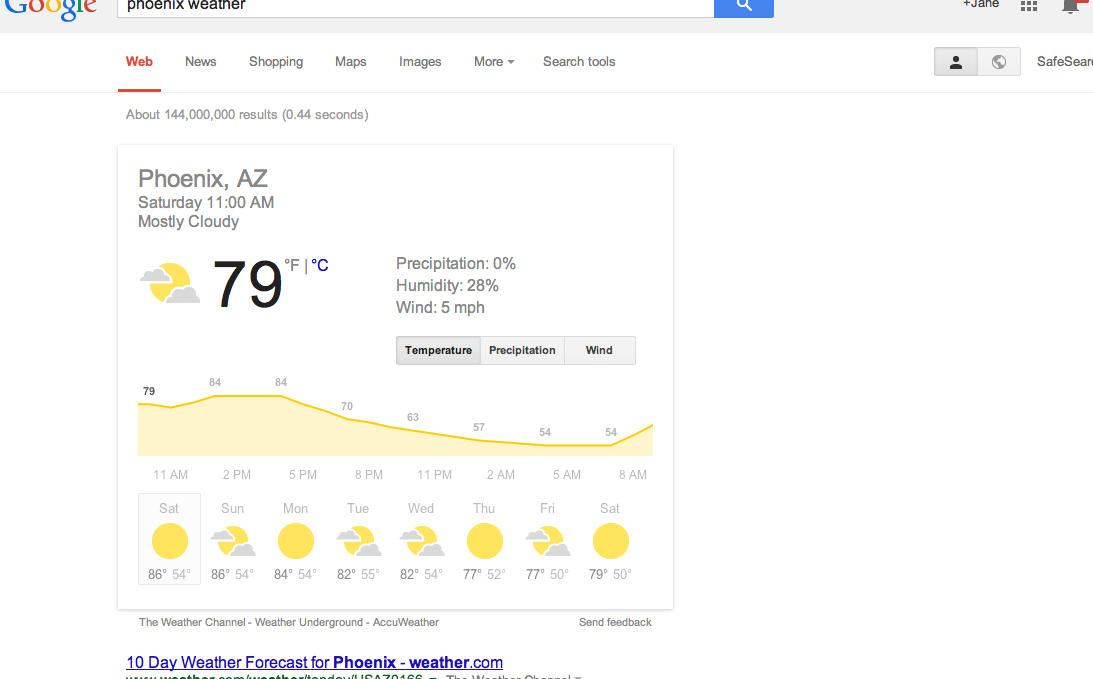
6. Checking the weather. But seriously, what did people do
without this? I don’t even have to CLICK anywhere and it pops up before I’m
done typing.
7. How-to for slalom waterskiing, in case your dad can't teach you.
8. Sharing your outdoor adventures via facebook. Probably
not necessary to include a link here, because we all get to experience our own/
our friends’ adventures anytime we want via facebook and it’s awesome.
9. Google mapping an obscure backpacking trail.

10. Google earth-ing anywhere on earth—again, to plan your
trip or escape for a while or remember an old trip or add one to your bucket
list or just generally be in awe of our earth.

Friday, January 31, 2014
Storytelling
Here’s
something that can bring on the awe: storytelling.
You know when there’s a
really good storyteller, and suddenly previously blah stories have power and
meaning and connection? Or when you’re just wandering around thinking of
nothing and you hear a good story and it captures you and changes your perspective?
Something like that
happened at the Reading Series last semester when Brian Doyle came:
(I
would suggest starting around 9 minutes and really tuning in around 10:30 for a
bit until 14:30ish to hear a good story.)
And
it’s like, even if you’re not really feeling the awe, like I didn’t really as I
relistened to this thing that impacted me
differently last November, at least it’s a good story. Even when I was there in the moment hearing this, I wasn't really swept away, but I was kind of in awe of him and his passion and stories.
He
reads this one I’ve posted below at around 32 minutes. I think it’s better when
you read it to yourself.
Tuesday, January 28, 2014
Personal Literary Narrative
In it’s uber-short blurb on this poem, Wikipedia says that “Do
Not Go Gentle into That Good Night” is “one of Thomas's most popular and
accessible poems.” That’s probably why it was so popular and accessible to me:
Do Not Go Gentle into That Good Night
Dylan Thomas
Do not go gentle into that good night,
Old age should burn and rave at close of day;
Rage, rage against the dying of the light.
Though wise men at their end know dark is right,
Because their words had forked no lightning they
Do not go gentle into that good night.
Good men, the last wave by, crying how bright
Their frail deeds might have danced in a green bay,
Rage, rage against the dying of the light.
Wild men who caught and sang the sun in flight,
And learn, too late, they grieved it on its way,
Do not go gentle into that good night.
Grave men, near death, who see with blinding sight
Blind eyes could blaze like meteors and be
gay,
Rage, rage against the dying of the light.
And you, my father, there on the sad height,
Curse, bless, me now with your fierce tears, I pray.
Do not go gentle into that good night.
Rage, rage against the dying of the light.
I think I first read it in a high school English class—maybe
in Mr. What’s-his-WWI-loving-name’s class my sophomore year at Carmel High, or
maybe with Mrs. Gouff of did-you-know-she’s-Mormon-and-goes-to-church-with-Jane
fame my senior year, in preparation for the AP Lit test at Templeton High.
 I think I read it again in either Dr. Westover’s class or
Dr. Eastley’s class—or both. I get them mixed up because they were both
entry-level BYU English classes, I took them both before my mission, and they
were both taught by young-ish male faculty members whose names contain cardinal
directions. I always wish that they would put your professors’ names on your
transcript.
I think I read it again in either Dr. Westover’s class or
Dr. Eastley’s class—or both. I get them mixed up because they were both
entry-level BYU English classes, I took them both before my mission, and they
were both taught by young-ish male faculty members whose names contain cardinal
directions. I always wish that they would put your professors’ names on your
transcript.
I read it again when the title refrain—the one that makes it
a go-to textbook example of a villanelle—got stuck in my head, post-mission, I
think. Do not go gentle into that good night. Rage, rage against the dying of
the light. I like to ponder the paradox that form frees the poet.
But it’s like, what if I want to go gentle into that good
night? What if Thomas’s expressed rage and passion against death actually make
death come out on top here?
I thought of it again when I was on vacation with my family
in August. We took a walk to the park and that refrain was stuck in my head
again—I wish I could remember why. Maybe because we were talking about death.
Or maybe my brother quoted it—he’s a random Tennyson fan and has a habit using
his unrealized intelligence to store disconnected facts instead of dedicating
said intelligence to his law classes. More likely I quoted it. But I always
seems to remember it as “do not go gently,”
which sounds better to me than “do not go gentle.”
In any case, I couldn’t remember who wrote it (do not go
gentle into that good night), but I could remember its exact location on the page of my Norton Anthology and that I connected it for some reason with the complicated deaths of British boys during WWI and with All’s
Quiet on the Western Front (speaking of awe/terror-evoking books…).
 |

So we looked it up on the first accessible smart-phone.
Probably my sister-in-law’s. And up popped “Do Not Go Gentle into That Good
Night” by Dylan Thomas. So I provided the small number of my immediate family
that was not playing on the park swings at the moment and still listening to me (maybe two family members, maybe three if
you count a sleeping infant) with some semi-fabricated context for the poem and
a brief personal explication.
And my brother, Sam, said something like “Yeah, I get it. He’s
saying we should fight until the end and not give in to death.” And I was like,
“No he’s not.”
Because even though I think Sam’s partly right—after all,
his perfunctory summation pretty well encompassed some much more scholarly
explications of the poem—the repeated refrain isn’t the only part of this poem
that gets stuck in my head. There’s something else there that’s too big for a “yeah,
he’s saying ____” statement. Probably that something that we murder when we dissect. Something to do with death and literature and legacy and being
remembered that you can’t put into an essay on your AP Lit exam or quite
capture in any survey lit course. Something about not going gentle into that
good night, but rage, raging against the dying of the light, or something else.
Disconnect
(n.b. this is not my personal literary narrative)
So, my mom is a nurse. She doesn’t have a bachelor’s. She’s
a good mom to me—way better than her mom was to her. She’s super supportive and
she puts on her listener hat when I need her to listen, but at the end of the
day, she’s all about practicality: Mom the Practical.
Mostly thanks to Mom the Practical, I am a BYU student. I’m
almost done with my enlightening bachelor’s in English, and I love my Spanish
minor. I’m also an editing minor, but I did that mostly to appease Mom the
Practical, and I have no intention of ending up with a practical editing job. This
semester, I chose to study The Literature of Awe.
The other day I was on the phone with Mom the Practical,
trying to describe to her some conflicts I was having with The Literature of
Awe. “What about the prosaic?” I mused. “What about connections to life and
getting up in the morning? How audacious is this course? How can I raise any of
this without offending people in the room who will make all of this
impracticality their career? Why am I a humanities major?” Etc.
“Honey,” Mom said, “don’t bring any of that up. Just write
what they want to hear. Do what you need to do for the class and move on. They
don’t want to hear about that.” (But isn’t they
actually we, or me?)
Obviously, I’m not taking Mom the Practical’s advice on this
one. Cite current blog post.
But let’s talk about healthcare. When I’m not studying The Literature
of Awe, I’m an intern for a research firm that specializes in healthcare IT. I
do it partly because they pay their interns well and partly because I might
choose a master’s in healthcare administration after this English-major life
dies.
No, let’s talk about Wordsworth. Let’s talk about Puritan
rebel figures. Let’s talk about how to teach a Rec Management student how to
create a well-formed thesis statement. Let’s talk about the literary works that
bring me awe.
But wait, let’s talk about changing my niece’s dirty diaper
and being on time to meetings. Let’s talk about scraping your windshield in the
morning and getting up in the morning and going to work. Let’s talk about
paying rent.
Worse (or better?) yet, let’s talk about my converts in the
Philippines—the ones who live in poverty so real and so putrid that maybe
they’ll never know awe. Let’s talk about microfinance and baptism as solutions.
Let’s talk about Africa.
Or we can talk about The Literature of Awe. But when we do,
must it exclude Mom the Practical? Must it exclude any future career that
doesn’t land me in the JFSB? Must it exclude sticky-fingered toddlers and
punctuality and the prosaic? Must it exclude the underprivileged? I’m only
coming up with disconnect.
Friday, January 24, 2014
10+ Favorites
In no particular order and chosen randomly from a few dozen… here goes (you might leave the Rachmaninoff running for a bit):
“Mi Ultimo Adios," José Rizal (or any of his poetry in Spanish, Tagalog, or translated English): an entire nation standing behind their hero
Othello, Shakespeare: Desdemona as apotheosis of the female
perspective
Gone With the Wind, Margaret Mitchell: with God as my
witness
Don Quixote, Cervantes: thanks to an entire semester of him…
but who’s insane?
"Speech to the Troops at Tilbury," Elizabeth I: the heart and
stomach of a king, and of a king of England too
Sergei Rachmaninoff: anything and everything
“The Buried Life”, Matthew Arnold: are we sure he wrote that
150 years ago?
“Love, An Index,” Rebecca Lindenberg: coping with her poet
boyfriend’s disappearance into a Japanese volcano… for real
Ruth, The Bible—oh, and Jacob and Rachel, and Job, and
Isaiah especially: talk about good stories
“On His Blindness”, John Milton: changed my mission
La casa de los espiritus, Isabelle Allende: gave me mysticism
and another world
The Secret Garden, Frances Hodgson Burnett: I just love
everything about it
Subscribe to:
Posts (Atom)