Showing posts with label posted by Cara. Show all posts

Saturday, April 19, 2014

Miracle of Memoirs: My Creative Project

Here is the video that I made for my creative project. I wrote the poem and edited the video, and the music is the song "The Letter that Never Came" by Thomas Newman. I've pasted the text of the poem below, if you want to read it separately. 


"This is the fear that chains us. The fear of forgetting what once was. The fear of memories slipping through the cracks.

Our world dances to the mantra “Make it new!” and time shakes the chain.
We sense the age of things the moment the new bursts onto the scene, and, like a strawberry that is barely too sweet or like an apple to oxygen, the newness fades with our attention. 

Yet we don’t want to forget these moments, however old and brown they may be. We are swept from them in the whirlwind of time. It frightens us to see them fly away so quickly, to leave us before they were ever really with us.

So we capture them, “For later,” we say. “When the time slows down.” And when that time comes we will hold the ghosts of these moments close and try to uncover their mysteries. We will force them to relive what they are a thousand times so we can pretend they never left us. 

With our cameras, and our pencils, and our keyboards, and our touch screens, we will make these moments our own.

So we can relive the past. On our own terms."

—Cara Gillespie 


Wednesday, April 16, 2014

The Journey to My Paper

The idea for my paper first began when Dr. Burton wanted us to start thinking about things that brought us awe. I had been reading a lot of memoirs lately, and had just recently taken some classes on non-fiction writing, so this type of writing was definitely on my mind. I started by writing posts like this about experiences in my own life where I experiences awe simply with basic life experience. Also, the fact that we were required to be keeping Wonder Journals got me thinking about the connection between writing out our life experience and living it.

As we delved more into the theory behind awe, I began thinking of life more in terms similar to the ideas presented in this post. I also started to realize that memoirs have always brought me a special type of awe because of the fact that they are about real life. I loved reading about the power of the human spirit and the nuances of human connection. I realized that one of the main reasons I read memoir was to inspire me of ways to redeem my own life in similar ways to the way authors of memoirs redeemed theirs. Looking back on my life, I sensed a trend of being more interested in reading memoirs during times of struggle in my life. They gave me hope that if obstacles of this size could be overcome, then my obstacles, which were much smaller in comparison, could be overcome as well.

Meanwhile, while all of this self-reflection was going on, my work in class continued. We made a list of the ten books that caused us to experience awe and I wrote a specific blog post on a special experience I had with a certain piece of literature in regard to awe. Each of these assignments caused me to realize that life and literature are inextricably linked, and that this link is most pronounced within memoir.

I started my idea for my paper based on the idea that the ordinary is the launching pad for awe and that this is the formula under which memoir operates. People don't like something and so they change it (ex: Eat, Pray, Love or Wild). However, the more help I received and the more I discussed my topic with others in the class, the more my perception of the real purpose of memoir evolved. My conferences with Dr. Burton were particularly helpful because he opened my eyes into just how deep the connection between memoir and awe could go. Dr. Burton helped me to realize that memoir is so much more than just taking off on a trip around the world because you hate your job and then writing a book about it. Memoir is a special kind of miracle in itself in which we can reshape and relive our own history.

At the beginning of the semester, I checked out a ton of memoirs and books on writing memoirs from the library. The more I delved into the sources, the more the ideas started to run wild. Assignments like the annotated bibliography were helpful in narrowing down the importance of each source.

As my paper progressed and I began pumping out drafts  and narrowing down potential audiences and then doing it again, my paper slowly started to take shape and I began zeroing in on the redemptive power of memoir over life and the ordinary. This idea became the basic thesis of my paper. I also received social proof from Lisa Roylance, a fellow English student who took a 495 class focused solely on memoir last semester, and read her paper and looked into many of her sources. Talking to her and reading her paper was a tremendous help.

Finally, after a long journey, I finished my paper and posted the final version and I feel like I should give credit to so many more people than myself on this final version. I've learned that it really does take a village to raise a paper. A good one, anyway. I only hope that my paper does justice to all of the amazing feedback, literature, and ideas I took in from the people that surround me.

Monday, April 14, 2014

Final Draft: The Miracle of Memoir: Redeeming Life and Reclaiming the Pieces

Here is the link to my final paper!

The Miracle of Memoir: Redeeming Life and Reclaiming the Pieces

And here is a link to a Word document version, if you need it. The formatting got a little messed up on the bottom in the crossover, which is why the link above is in pdf format.

Friday, April 11, 2014

Vetting Venues for Memoirs

1. Venue Research and Reading Report
In preparation for submitting to a/b: Auto/Biography Studies, I read "Crossing Boundaries: Authority, Knowledge, and Experience in the Autobiography Vida y sucesos de la monja alférez" by Sonia Pérez Villanueva and "Auto/biographical Ethics: The Case of The Shoebox" by Janet Elizabeth Marles. Both of these articles appeared in the Winter 2013 issue, Volume 20, Number 2.

2. Venue Title and Sponsoring Organization
The title of the journal is a/b: Auto/Biography Studies. It is published by the University of North Carolina at Chapel Hill with support from the University of West Georgia, the University of Puerto Rico at Mayazuex, and the University of Wisconsin-Whitewater.

3. Call for Papers and Dates
This is the link to their page detailing their submissions process. They accept submissions all year, but because they utilize a vigorous peer-review process, it can take them anywhere from 6 to 8 months to respond to the author, which is a pretty long time. They publish two issues per year, one in the summer and one in the winter. I think my paper would be a good candidate for the winter issue.

4. Topic
My paper will be a good candidate for this journal because they look for scholarly essays regarding autobiography and biography studies, and memoir is a facet of autobiography. They said that they especially like papers that cross genres, and I think my paper does this to an extent. Essays also need to have theoretical framework, which, thanks to the awe component, my paper has. There self-description is that they are "a journal of scholarship dedicated to expanding the discourse on life narrative in all its diverse forms," which I think fits with my paper pretty well.

5. Length
The suggested length for essays is between 7,500 and 12,000 words, including all notes and Works Cited pages.

6. Formatting
All essays must follow the MLA format, as well as adhere to the complete a/b: Auto/Biography Studies style guide. I also must remove any identifying information from my essay so the peer review can be completely blind.The essay must also be submitted with a cover letter and a brief abstract. The process is pretty intense, I hope I'm academic enough for it!

7. Tone and Rhetorical Approach
The tone of the journal definitely seems to be academic, obviously, but there is also an element of human interest given the subject matter. Because the journal is basically studying writing about life itself, there is definitely a more human and personal feel to the journal and the publications than there is in other academic journals of its type.

8. Social Media
I found this site about the managing editor of the journal, who is also apparently a PhD candidate for English at the University of North Carolina, Chapel Hill. Also, here is a link to the Facebook page for the journal, which I liked on my own Facebook page.

9. Mentors
I liked the Facebook page, but I haven't been able to find anything about them on Twitter. And the Facebook page is pretty limited in its information. I'll keep looking into it though.

Monday, April 7, 2014

Memoirs + Awe Rough Draft

Here is my rough draft of my paper. It doesn't look very good or even really make a lot of sense right now, but I've been doing a lot of behind the scenes work with compiling quotes and outlining my new ideas about where I want to take it, which will become more apparent as I work on writing them out this week. The work I do this week will consist of organizing and fleshing out the final pages of the paper. Also, the formatting might be off because of the transfer of formats.

Saturday, April 5, 2014

Memoirs + Social Proof

I got in touch with Lisa Roylance and she sent me a copy of the paper she presented at the recent BYU English Symposium titled "The Importance of Memory Holes in Memoir." Not only will the paper itself be a great resource, but Lisa will also be great to bounce ideas off of and take advice from. Her paper is very interesting, and her list of references has a lot of sources that I think I may end up using in my final paper. I'm really excited to have found someone else researching along similar veins!

Here's a quote from the end of her paper:


"Memoir reminds me of the inevitable imperfections that I have. It brings me to more questions than answers sometimes, more spaces to look at and patches to sew. I’m the only one that can do it, though. I am the doctor looking at my past and living in my present, and both are full of mistakes. I am the patient wanting to learn and find healing from the cuts and scrapes of my past. That, I believe, is the true power of honest memoir – allowing the reader to find their own past filled with holes and “I don’t know’s” to peer at the light caught in a drop just as it dangles from the web" (Royalnce 15).

Monday, March 31, 2014

Updated Audiences for Memoir

Social Proof

At the BYU English Symposium, there was a panel title "Memoir: Unlocking Identity and Memory through Narrative Style." Although I was unfortunately unable to attend the panel, I plan on contacting some of the presenters to read copies of their papers. I have a class with Lisa Roylance, the girl who presented the paper "The Importance of Memory Holes in Memoir," so I'm planning on asking her tomorrow about it. Judging by the titles of the papers, I think these will be really helpful to collaborate with as I continue structuring my paper.

Paper Venue

As far as publishing my paper goes, I'm thinking I'll just go with the 1966 Journal. I'll probably submit to a few other journals, too. But right now I'm think that I won't go the blog publishing route. I think my paper is getting too long/academic to be well-suited to that type of format. Even though blogs are a sort of memoir and it might be interesting for bloggers to read about why exactly they find blogging to be so fascinating, I think the very nature of blogs (simplicity and brevity) would cause them to reject anything near an academic paper.

Wednesday, February 26, 2014

Lebensphilosophie: The Balance between Biology and the Human Spirit

Photo source
Introduction

I chose to research the theory behind Simmel’s life-philosophy, otherwise known as Lebensphilosophie, in relation to my research concerning memoirs. I thought that his philosophy would be pertinent to what I’ve been studying because it deals with finding meaning and value in life, a pursuit that memoirs tend to be completely centered around. As I demonstrated in this post, I’m exploring the sense of awe that results from reading these memoirs, or encapsulations of people’s lives, and also the awe that is captured within these memoirs as pertaining to the life of the individual. Because of what I am striving to discover, it is important for me to deconstruct what we consider to be life in itself. 

Lebensphilosophie Theory

Basically, Simmel’s theory serves as the middle ground between two trains of thought regarding life. The first train of thought it stands between is that of reductionism, where the meaning and value of life is reduced to simply the fact that something is alive. Under this train of thought, it is easy to reduce life “to genes, DNA, or organism” (Pyyhtined 79). Those who see life under this train of thought are those who deal with technoscience, slowly revealing life’s mysteries through the power of technology and science. On the other side of the spectrum is the train of thought that deals with mysticism. Under this train of thought, life is seen to be as an ethereal thing dominated by the acts of the soul. These ideas come from religious ideologies and other institutions dealing with the things in life that are largely unseen. 

Friday, February 21, 2014

For Shelly: The Awe of the Gothic

The moors that the Brontë sisters traversed daily to receive inspiration for their gothic novels.
Before reading the novel Jane Eyre, I had always written it off in my head as a book similar to the Austen novels and one that would surely spend too much time in parlors and in analyzing conversations. But once I read it as a part of my English Novel course, I was happy to discover quite a different novel all together. Although Jane Eyre is set in a similar time period and follows similar female protagonist patterns as many of Jane Austen's novels, the content takes an entirely different turn. Jane Eyre dwells in the ordinary but this ordinary is influenced and laced with the extraordinary and the often unexplainable.

Indeed it is upon this key difference that Charlotte Brontë based her chief criticism of Jane Austen in a letter she wrote to one of her literary agents after he encouraged her to read Pride and Prejudice and apply its principals to her own writing:

Tuesday, February 18, 2014

Shock and Awe: Research Stuff for Erin

I've been looking into the connection of terror to awe in relation to Erin's research. The first thing I thought of when I thought about being fascinated by the terrible was America's obsession with watching the news channels, which are generally full of all the horrible things happening in the world and all of the possibly horrible things that might happen in the world. Given the fact that news channels have evolved to the point where many of them are broadcasting for 24 hours a day, I think it's safe to say that the general public is obsessed with the awful.

Here are a couple articles about the psychology and effects behind bad news:
I also think it would be interesting to look into anxiety and how more people are on anxiety pills than ever before. It's like we are all living in a constant state of fear of what might happen because we are so in touch with the world and every horrible thing that happens.

Here are a few articles about anxiety and how prevalent it's becoming:
Hope that helps!

Friday, February 14, 2014

I Can Feel You Through the Screen: Emotional Connection via Digital Medium

I feel the most awe in the digital landscape when I come across things that make me feel things through the screen per say. The message and presentation is so powerful that for a moment I forget that I'm only watching a reproduction, or reading an artificial preservation of their words. It's really only a bunch of code and a screen producing my experience, but nevertheless these experiences can be incredibly real. For me, these types of digital experiences often come through the form of recordings of slam poetry, blog posts, or Pinterest quotes, just to name a few. I've listed a few of examples of things that have brought me awe through the digital below. They are in no particular order.

1. "My Honest Poem"


I've watched/listened to this poem more times than I can remember. There is something within me that resonates deeply with it. The tone changes in his voice as the poem progresses are really powerful, and the poem is best experienced being watched and listened.

2.  "Touchscreen"


"When our technology is advanced enough to make us human again."
This poem describes the negative side of the digital evolution in such a way that never fails to leave me resenting technology and the artificiality it can engender.

3. "If I Should Have a Daughter"


Sarah Kay is brilliant and I'm jealous of her talent with words.

4. "The Fringe Benefits of Failure"


I don't go to Harvard, but thanks to technology I could listen to this amazing commencement speech by J.K. Rowling. She never fails to amaze me with her ability to transition from jokes to wisdom so seamlessly. This speech changed my perspective on life and accomplishment, and made me love the Harry Potter series only that much more.

5.  Run.


I first saw this on Pinterest. I love the type that looks like handwriting. It adds a human element, which makes it seem more real and reminds me that there is a life outside of screens that can only be dealt with through bodily activity, not just mental activity.

6.  Love, Taza

I am obsessed with following this adorable family's life in New York City through their mom's blog, and this blog post made me cry. It wasn't the first one of her blog posts to do that, either.

7.  Mumford & Sons lyrics on Pinterest


I never realized just how beautiful these lines were from their song "Sigh No More" until I saw them designed like this on Pinterest.

8.  "When Memory Began to Matter: The Story Told in Modern Literature and Philosophy"
Being able to watch this inspiring and intellectually stimulating discussion between BYU professors that ultimately left me awestruck was an experience that would not have been possible twenty years ago.

9.  National Geographic photography


Oh how I love this website and all of its free desktop wallpapers.

10. Skype


Whether it's across the Pacific Ocean, from Mexico to Utah, or from Washington to Nevada, Skype connects. Every time I use Skype, I am flabbergasted that it is even working in the first place, not because it's unreliable (although that is sometimes the case), but because it's amazing! It's a wonderful thing.

Sunday, February 9, 2014

The Awful and the Awesome: Why Memoirs Encapsulate Awe

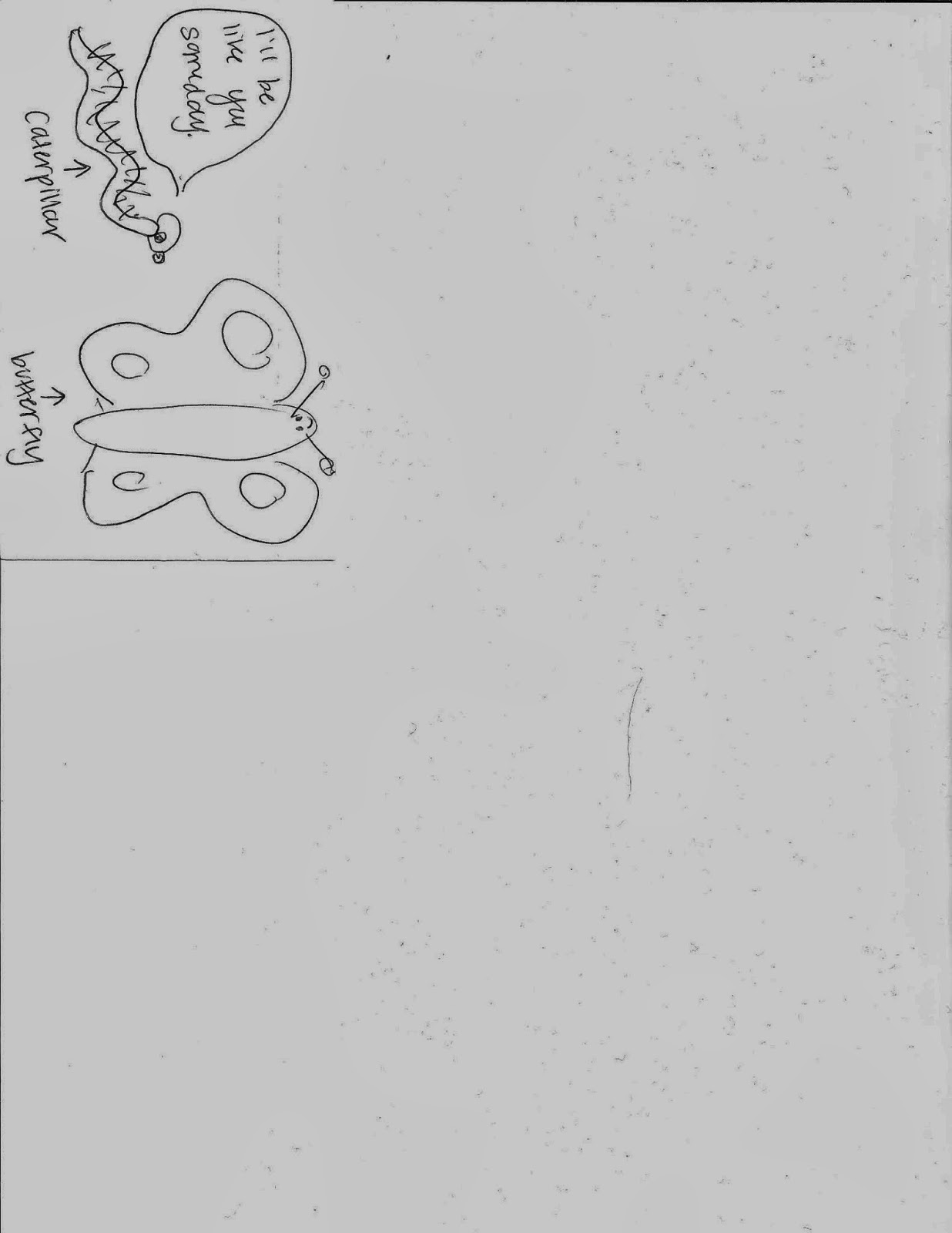
(My scanner did a pretty strange job scanning the cards. Also, I couldn't figure out how to flip them. So here's my presentation in all its crappy glory. Enjoy. Don't crank your neck too far. Trust me, the drawings aren't worth it.)


What is the occasion for memoir? Why are we so drawn to some and not to others?

What makes a life or experience worthy of appearing in a memoir?

The difference is usually in the quality of experience. As humans, we are fascinated in how people get from point A to point B.

But how do you compare experiences when they are all so different? How can we resonate with something that is clearly different from our own? Why do we prefer reading about some experiences over others?

There has to be some degree of awe involved for us to be interested. Usually, it is something awesome or awful.

But how do these things happen to people? Is it what happens to them or what they make of what happens to them that makes it interesting?

It all hinges on a critical decision that may seem unnecessary or irrelevant at the time, but ends up having big consequences.

ex: The Last American Man
-Eustace Conway loves the outdoors
-his dad is abusive and thinks loving the outdoors is silly and useless
-one day Eustace runs away from home and survives in the woods using his skills
-this decision shapes his entire life

Eat, Pray, Love
-Elizabeth Gilbert is wildly successful, but severely unhappy
-trapped in marriage, ordinary milestones aren't leaving her feeling fulfilled
-takes off on a trip that seems crazy, but ends up changing her life

Wild
-Cheryl Strayed's life is falling apart, her father dies
-decides on a whim to hike the entire Pacific Coast Trail
-finds herself and realigns her life

But why? What drives these decisions to go in search of awe? To shrug off the mundaneness of life?

They want a new ordinary, a new way of existing from the day to day. They want to go from the old ordinary to the new ordinary.

Thus, the ordinary is the launching pad for awe. It is what drives the initial decision and continued pursuit.

The ordinary and awe exist in a cyclical and symbiotic relationship that is essentially the driving force of our existence.

Thus, we read memoirs because they are dramatized, concentrated, and sometimes exaggerated versions of the cycles we wish to replicate within our own lives of rising above the ordinary to reach for awe and a higher plane of existence.

Friday, January 31, 2014

The Ordinary: A Launching Pad for Awe

I've started reading some memoirs as a part of my research in regard to what drives people to go in search of awe, in search of something greater than what they can see from their current circumstances.

In reading about Steve Jobs, I've learned that he was adopted as a child. Many people who have worked with Jobs claim that being adopted was the shaping moment of his personality. Del Yocam said "I think his desire for complete control of whatever he makes derives directly from his personality and the fact that he was abandoned at birth."

Jobs himself said that finding out he was adopted "made him feel more independent" but claimed that he has "never felt abandoned. I've always felt special." Later, Jobs would go on to spearhead the "Think Different" campaign, the advertising movement that ultimately changed Apple's status from "silly toys" to "the cutting edge creative computer."

But in order for someone to think differently, the majority of people have to think the same. If we all thought different, then there would be no room for individuality, for that groundbreaking moment when something supersedes what we ever thought was possible and raises our expectations to another plain. We need the ordinary to launch into the extraordinary. So shouldn't we be encouraging the ordinary folk, too? Shouldn't we be praising the mundane, the routine, and the people who just want things to stay the same?

Or does enough of that already happen on its own?


Tuesday, January 28, 2014

Learning to Walk in the Dark

I don't remember the exact moment I checked out The Screwtapes Letters by C.S. Lewis from the BYU library, but I do remember why I checked it out. I was lost. I had reached a crossroads in my life, and I wasn't sure which direction I should go. Things that I had taken for granted, ideas that I had assumed were unchangeable, had all come crashing down around me and I was left staring at the rubble, trying to remember how to build it back up again. I guess finding this book was God's way of giving me the first few pages of the instruction manual.

He will set them off with communications of His presence which, though faint, seem great to them, with emotional sweetness, and easy conquest over temptation. 
While piles of homework stood neglected on my desk, I laid on my bed in my cramped apartment and held this book above my face, turning the pages as fast as I could read. I wanted to understand this moral game that everyone told me I was a part of. I wanted to understand why I continued to progress and then digress, despite clear "communications of His presence," which seemed "great" and provided "easy conquest over temptation" but always seemed to fade eventually and I would once again be left feeling alone, shouting angry words, and thinking that my existence was insignificant, left with only the whispering memory of what I had once felt.
But He never allows this state of affairs to last long. Sooner or later He withdraws, if not in fact, at least from their conscious experience, all those supports and incentives. He leaves the creature to stand up on its own legs–to carry out from the will alone duties which have lost all relish. 
But, ironic as it was, these letters written from one devil to another were helping me to understand the divine nature of God more personally than any other piece of literature I had read up to that point. It made Him real. It made everything real. It put life in a sort of perspective I hadn't considered before, a perspective I would have been less willing to accept had my paradigm cathedrals still stood fully intact. Thankfully, they were broken, and because they were broken they could be molded. I found the strength to take tiny steps into the darkness, "to stand up on [my] own legs," to believe that something was one way when everything seemed to be screaming at me that it was another. 
It is during such trough periods, much more than during the peak periods, that it is growing into the sort of creature He wants it to be. Hence the prayers offered in the state of dryness are those which please Him best. 
I began to gain a deeper understanding of "trough periods." I began to understand their necessity and benefits, their power and the lessons they held within their sometimes torturous depths. I began to understand that God is sometimes silent, that he doesn't always blow his trumpet, forcing us to acknowledge Him and His power, because He doesn't want children who are forced to come to his lap. He wants children who choose Him. Willingly.
We can drag our patients along by continual temptations, because we design them only for the table, and the more their will is interfered with the better. He cannot 'tempt' to virtue as we do to vice. He wants them to learn to walk and must therefore take away His hand; and if only the will to walk is really there He is pleased even with their stumbles. 
Agency. That was what it all came down to. The more I came to understand that temptations are designed "only for the table," only for the limited and fleeting pleasure that comes from indulging appetite, the more I understood how profoundly God loved me. I realized He wants me to "learn to walk" because it is what I need. Even though it may require all of his self-control to keep His hand at bay, to let me fall on my face and cry, to get up only to stumble againHe does it. And "He is pleased even with [my] stumbles."
Do not be deceived, Wormwood. Our cause is never more in danger than when a human, no longer desiring, but still intending, to do our Enemy's will, looks round upon a universe from which every trace of Him seems to have vanished, and asks why he has been forsaken, and still obeys. 
It was a simple and profound concept that struck me to my core. He is pleased even with my stumbles.The thought echoed in my mind and stayed there. It is there every time I come crashing down to my knees in prayer, weighed down with my own weaknesses. It is there to remind me whenever I am disappointed by others and find myself cursing their stumbles. It is there when I am tired and sad, searching for some sort of explanation or fragment of hope. It is there and it gives me hope. And I get up to try again.

Sunday, January 26, 2014

TEN.

Here's the list of ten pieces of literature that have brought me awe. Instead of a description, I included a brief quote from each.

1. Jane Eyre: “. . . your soul sleeps; the shock is yet to be given which shall waken it . . .”

2. The Book Thief: “They were glued down, every last one of them. A packet of souls.”

3. My Grandfather’s Blessings: “A pearl might be thought of as an oyster’s response to its suffering.”

5. A Monster Calls: “There is not always a good guy. Nor is there always a bad one. Most people are somewhere in between.”

6. To the Lighthouse: “This is not what we want; there is nothing more tedious, puerile, and inhumane than this; yet it is also beautiful and necessary.”

7. The Screwtape Letters: “. . . and if only the will to walk is really there He is pleased even with their stumbles.”

8. The Catcher in the Rye: “I mean, how do you know what you’re going to do until you do it?

9. Extremely Loud and Incredibly Close: “It’s always necessary.”

10. Moses 1: “Who art thou? For behold, I am a son of God, in the similitude of his Only Begotten. . .”

Thursday, January 23, 2014

A Moment in Malibu: How Edmund Burke Explains the Unexplainable

"And indeed the ideas of pain, and above all of death, are so very affecting, that whilst we remain in the presence of whatever is supposed to have the power of inflicting either, it is impossible to be perfectly free from terror. . . . But pain is always inflicted by a power in some way superior, because we never submit to pain willingly. So that strength, violence, pain, and terror, are ideas that rush in upon the mind together. . . . That power derives all its sublimity from the terror with which it is generally accompanied, will appear evidently from its effect in the very few cases, in which it may be possible to strip a considerable degree of strength of its ability to hurt. When you do this, you spoil it of every thing sublime, and it immediately becomes contemptible."
—Edmund Burke, A Philosophical Enquiry Into the Origin of Our Ideas of the Sublime and Beautiful, pp. 59–60

When I first read this passage, I was reminded instantly of an experience I had this past November. I was in California for my friend's wedding with my mom, and that night, after all of the festivities had finished, her family invited us to come spend the evening at the beach house they were renting out for the week. My mom and I drove through the rolling California hills toward Malibu as the sun set and the sky turned a glowing shade of purple. It was breathtaking. The smell of Eucalyptus trees hung in the air and I rolled down my window to breathe it in. Even though it was November, the air wasn't cold. The sky was clear and the stars were beginning to emerge.

After we got to the beach house, I walked out the backdoor and down the wooden steps to the beach. My mom didn't want to get sand in her shoes, so she stopped at the steps and sat down to send some overdue text messages. I slipped my shoes off and walked into the cool sand.  I couldn't believe how close it was. It stretched in both directions, and, as far as I could see, I was the only one on the beach that night.

I walked right up to the ocean. I was almost beyond the stretch of the porch light from the beach house. I stood on the wet sand and waited for the waves to come up and wash over my feet. I stared down at them until I saw the water and sand swirl around them, touching the tips of my jeans. Then, for the first time, I looked up. The ocean was black and the thunderous rhythm of waves shook me to my core. The stars covered the sky like God had thrown sugar into the heavens. They reached all the way down to the horizon, kissing the mass of salty water that churned and brooded beneath their pearly glow.

I had never felt so small in my entire life. The power and vastness of the ocean made me feel frail and humble. I realized that no matter how big of a boat I built, or how strong of a swimmer I was, I would never be able to conquer this ocean. The darkness only added to its mystery, compounding my sense of awe and submission in the face of this power that has stood since the dawn of time.

I stood there on that beach and I started to cry. As I gazed on the endless expanse of ocean and stars, I was overwhelmed with a sense of both my own nothingness and my own eternal nature. It was clear to me in that moment that there is a power that extends far beyond anything I can understand.

It was difficult for me to pinpoint what exactly had caused these emotions. But after reading this Burke quote, I understand it more fully. The sense of the sublime I felt that night was in large part created by the enormous power I saw before me. My own helplessness in the face of this power, the mystery and beauty that confronted me induced, as Burke noted, a sense of terror and this terror is what propelled me into the sublime.

Why does terror cause us to feel a sense of the sublime? What relation does this have to "fearing God"? Is this God's way of helping us cultivate a sense of awe and reverence toward Him?

Thursday, January 16, 2014

The Paradox of the Human Body

Yesterday morning around 7 A.M. the sound of sirens leaked into my window. At the intersection just up the street from my house, a woman had been killed. She was crossing the street on her way to work, and, in the darkness, was struck by a 49-year-old man driving a GMC truck. She was a single mom, and later, when the police interviewed her three daughters, ages 12, 14, and 16, they were told that she had been walking to work because the brakes in their car were broken.
When I first heard this story, I was in shock. I stared at that intersection, now busy with cars full of people rushing off to buy milk or to get home to their families after a long day of work, and could only think about how a woman had died there this morning. But the ground was not sacred. At least not to them. They drove over it again and again, completely ignorant of the life-shattering moment that had occurred there only hours earlier.
Imagining a truck striking a fragile human body fills me with pain. It's like imagining a sledge hammer coming down on a piece of ancient pottery, the brute and unrelenting force crushing the delicate structure. It's not a fair fight. I can almost feel the way the internal organs would be crushed, unable to withstand the pressure of impact, and the way the skin would tear and bruise, leaking out its red contents. The human body is so delicate. So very, very delicate.
I can't help remembering the bodies of babies I saw in the ICU, resting in incubators next to my brother's. They were so small and so utterly helpless, like baby birds confined to their nests. Or the time I went cliff jumping and landed wrong when I hit the water, earning myself a bruise the size of a cantaloupe. I couldn't stop staring at my raised purple and blue flesh, feeling my nerves scream when I brushed my fingertips ever so lightly across the surface. I apologized to my body. I'm sorry I did this to you, I said. I'm sorry.
But the body is a funny thing. It's amazing that the same set of DNA, the same set of arms and legs and muscles and bones can carry my little brother on my back all the way up to Timpanogas Cave, but is completely wiped out by a microscopic virus. It's amazing how the same body can climb to the top of the highest mountain in the entire world, surviving on minimal amounts of oxygen, but can die from a blood clot the size of a nickel.
If given enough time, the body can adapt to almost anything. The muscles in our bodies rise to meet the challenges presented to them, tearing themselves apart and rebuilding over and over again until they are at last strong enough to resist what resists them.
The body is a paradox. It is durable and delicate, sensitive and tough. It can adapt and it can demand.
It is an amazing piece of work.
Sometimes I think it's easy to criticize our bodies. We get so lost in the wrapping, in the way our hair falls around our shoulders, the shape of our nose, or the color of our eyes. It's easy to become angry at our bodies for not looking or acting the way we want them to. We forget so easily. We forget what a gift our bodies are. We forget how much they can do. Bodies are precious. They deserve our awe and they deserve our respect. And most of all, a body deserves protection—even if it isn't our own.