Showing posts with label literary theory. Show all posts

Friday, February 28, 2014

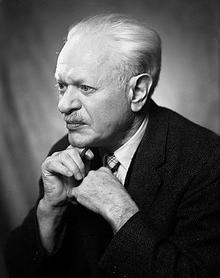
Ethics, Theater, and Emmanuel Levinas' "Other"


Emmanuel Levinas was an amazing man, scholar and philosopher. It was a privilege to get to know him better and see what a great impact he made on the world. He only died 19 years ago in 1995 and left with him a lasting philosophy of our responsibility to what he called “the other.” I thought this philosophy would work well with my topic of theatre.
Emmanuel Levinas studied phenomenology, or “the study of the structures of experience and consciousness.” He was among the first philosophers to try and figure out the “I” in relation to other people and experiences. In his book Totality and Infinity he says, "Everyone will readily agree that it is of the highest importance to know whether we are not duped by morality."[Levinas 21] And his quest was to prove we are not.  Being moral is how we live.


His obituary spoke clearly of his beliefs:
“Dr. Levinas's alternative to traditional approaches was a philosophy that made personal ethical responsibility to others the starting point and primary focus for philosophy, rather than a secondary reflection that followed explorations of the nature of existence and the validity of knowledge.
"Ethics precedes ontology" (the study of being) is a phrase often used to sum up his stance. Instead of the thinking "I" epitomized in "I think, therefore I am" -- the phrase with which Rene Descartes launched much of modern philosophy -- Dr. Levinas began with an ethical "I." For him, even the self is possible only with its recognition of "the Other," (Steinfels)

Levinas then had an interesting relationship with theater; in fact most sources said he despised it. It only makes sense that the man who studied a real relationship to “the other” would not enjoy watching a parade of fabricated relationships.
But I still found many articles relating Levinas’s philosophy to the stage. I don’t think it can be helped.

Levinas adopted Heidegger's argument that the logos gathers up Being and makes it accessible to us. So Levinas believes that we can logically know truth. We can logically know truth through interaction with other people. He says, echoing the sentiments of Plato, “ The exploration of the self, ... unfolds in a language that is best communicated through enactment.” (Stanford)
Based off this statement I would have thought him very keen to the idea of theatre and entertainment. It puts men on a stage to emulate what human interaction does. But, Levinas would say theatre is only fake interaction. We don’t directly engage with theater so we gain nothing from it.

In one great article I found Liza Kharoubi brings up the ethical issue posed by Levinas about theater. “On stage,” she says, “we hop from one universe to another via different screens or projections. New media theatre exposes several timelines on stage. But isn’t the question rather: What does this uphinging, this “out of joint” time and space tell us about our “contemporary” time and space?” (7) What is the purpose of theater and why does taking us out of our own time make us relate to it. Kharoubi continues by calling “theatrical space and time…cultural constructs.” (6) These productions that we put on for viewing pleasure do more than just excite emotion.  She explains, “Like an excitable atom producing energy, the erotic theatrical space creates desire and enables us to get out of ontology and reach towards ethics.” (6) it tells us something we can hardly put into concepts, it reinvents, resensibilises, and wakes up the public’s attention. (10) Kharoubi argues we can have real experience through theatre it performs a metamorphosis of the audience so they do really experience a connection with Levinas’s “other.” She even takes it a step forward, a step I would like to take by saying that theater allows us to question the ethics of the world.

I definitely think there is lots to learn from Levinas about spectacle and theater whether he personally enjoyed it or not. In fighting against the artifice he makes many defend it and it is nice to see both sides.  I would suggest Kenna and who ever is doing spectacle look into his philosophy.


Works Cited

Kharoubi, Liza. “Interfaciality: Levinas and the ethical challenge of new media theatre.”             Academia.edu. 28 Feb. 2014             http://www.academia.edu/1690139/INTERFACIALITY_LEVINAS_AND_THE_ETHIC            AL_CHALLENGE_OF_NEW_MEDIA_THEATRE

Levinas E., Totality and Infinity: An Essay on Exteriority (Alphonso Lingis, transl. Pittsburgh: Duquesne University Press), p. 21.

Stanford Encyclopedia of philosophy “Emmanuel Levinas” First published Sun Jul 23, 2006;             substantive revision Wed Aug 3, 2011

Steinfels, Peter. “Emmanuel Levinas, 90, French Ethical Philosopher,” Published:             December 27, 1995

Photo credit:

http://emmanuellevinasrpt.wordpress.com/

http://streettalkin.com/jesus-christ-superstar-at-the-academy-of-music/

Power of the Language

Structuralism argues that all texts stand within a system. Saussure wrote a lot about how language is a system where the actual referent of the word or language is not necessarily part of the interpretation of the text. There is a difference between the signified and the signifier. The signifier being the word itself and the signified being the meaning of the word itself. This theory calls attention to the manner of the words and not necessarily the meaning or references made by the words.

Within this argument, the language becomes the system within which the text must be interpreted. The text itself is the effect and not actually the content of the text. Sanford Scribner Ames writes about this effect of language.

One system that is commonly addressed is that of language. All English speakers with completely different backgrounds and life styles and cultures can understand the same language. The influences of a set of language, or a system, are the same independent of the person. This is a system. But also the theory argues that the system  be understood collectively in order for the text to be understood and interpreted. The language must be a system. Sanford Scribner Ames writes about the effect of language in the structuralist theory:

Thursday, February 27, 2014

Pragmatism and Practical Criticism (Disambiguation)

Why We Need Disambiguation
Because literary theory is frequently connected to larger schools of philosophy, and because some theories are easily confused, here’s a little background on two very different theories that are not as related as their names appear. First we’ll do pragmatism, a comprehensive philosophy, then practical criticism, a specific literary method, then we’ll see how the two do or do not connect to a specific research question.

Pragmatism
William James, whom you may remember from a Psych 101 class or associate as the brother of novelist Henry James, helped found a school of philosophy called pragmatism. This is around the turn of the 20th century in America.

Pragmatism puts a problem (philosophical or otherwise) up to a test: it traces “the practical consequences (the difference it would practically make to anyone)…and if no practical difference whatever is found, then the alternatives mean practically the same thing, and all dispute is idle” (Wheeler 76).  James put it this way: “There can be no difference anywhere that doesn’t make a difference elsewhere.”

The Intricacies of Language

File:Kenneth Burke.jpg

Kenneth Burke was a literary theorist, who had a powerful impact on 20th century criticism, rhetoric, and so forth.  He analyzed the nature of knowledge and of language.  Creative commons license. 

As a starting basis, Burke believes that when we think, we use images, or symbols.  More on that later.  Burke believes that we have two main planes of thought: an absolute plane, where everything is absolute and set, and a conditional plane, where everything is fluid and there are no absolutes.  What we do when we use figures of speech, then, is take these two planes and place them next to each other, connecting two ideas in a certain way to create a third new image, a completely separate idea.  Burke claims (and no one after him has been able to disprove him) that all figures of speech can fit into four categories.  These four categories are “metaphor, metonymy, synecdoche, and irony.  And my primary concern with them here will not be with their purely figurative usage, but with their role in the discovery and description of ‘the truth’” (Grammar, 503).  This “truth” that Burke speaks of is how we make sense of the world through language.

Wednesday, February 26, 2014

Lebensphilosophie: The Balance between Biology and the Human Spirit

Photo source
Introduction

I chose to research the theory behind Simmel’s life-philosophy, otherwise known as Lebensphilosophie, in relation to my research concerning memoirs. I thought that his philosophy would be pertinent to what I’ve been studying because it deals with finding meaning and value in life, a pursuit that memoirs tend to be completely centered around. As I demonstrated in this post, I’m exploring the sense of awe that results from reading these memoirs, or encapsulations of people’s lives, and also the awe that is captured within these memoirs as pertaining to the life of the individual. Because of what I am striving to discover, it is important for me to deconstruct what we consider to be life in itself. 

Lebensphilosophie Theory

Basically, Simmel’s theory serves as the middle ground between two trains of thought regarding life. The first train of thought it stands between is that of reductionism, where the meaning and value of life is reduced to simply the fact that something is alive. Under this train of thought, it is easy to reduce life “to genes, DNA, or organism” (Pyyhtined 79). Those who see life under this train of thought are those who deal with technoscience, slowly revealing life’s mysteries through the power of technology and science. On the other side of the spectrum is the train of thought that deals with mysticism. Under this train of thought, life is seen to be as an ethereal thing dominated by the acts of the soul. These ideas come from religious ideologies and other institutions dealing with the things in life that are largely unseen. 

Language in Tiers

Language is a tool that allows societies to communicate, organize, and, also creates unity within a culture. At its basic form it can further progression and connections within society by its unifying characteristic. But even recognizing language at this elementary level generates interesting questions. How was the word tree decided, especially because you cannot objectively associate the name with the object itself? This question of what language truly is points to the idea that language has a higher purpose; Ralph Waldo Emerson restates this idea in his book titled Nature. He claims in this book that language is a powerful. If taken at face value, communication is the most basic function of language, but, he adds, there is more. He states, “We say the heart to express emotion, the head to denote thought; and thought and emotion are words borrowed from sensible things, and now appropriated to spiritual nature” (35). One word can be interpreted by what it literally means, but it also can mean something deeper. Although language is a helpful tool, there are different tiers of significance that allow language to reach its true nature. Achieving this requires engaging the senses. According to Emerson, the three tiers of language are
1. Words [as] signs of natural facts.
2. Particular natural facts [as] symbols of particular spiritual facts.
3. Nature [as] the symbol of spirit. (39)

The End of Art and Awe: Hegel in the Digital Age


From the title, you are perhaps expecting this post to be a depressing, cynical attempt at tearing down our modern notions of art and wonder, and if that's the case, then I have to apologize: this will surely disappoint. To understand what I really mean in saying "the end of art" or "the end of awe," though, we have to have a foundation in German Romanticism and, more specifically, in the art
istic philosophies of Georg Wilhelm Friedrich Hegel.

Hegel is perhaps best known for the eponymous Hegelian dialectic, which suggests that through the recursive struggle and interplay of thesis and antithesis--of action and reaction--mankind has, at various times, been able to arrive a state of synthesis or resolution, wherein he is able to achieve real progress. In his Introduction to The Philosophy of Art, Hegel applies the dialectic to the progression of art, stating essentially that the highest form of art is that in which the sensuous form (the work of art itself) and the spiritual form (the ideas conveyed by the work of art) find harmony or resolution. "[T]he perfection and excellency of art," he writes, "must depend upon the grade of inner harmony and union with which the spiritual idea and the sensuous form interpenetrate" (376). Hegel suggests that in lower forms of art, such as sculpture or architecture, the thesis and antithesis of spiritual and sensuous forms have yet failed to reach an equilibrium. The highest form of art--the end or aim of art in Hegel's view--is in poetry, wherein the art itself is capable of conveying the full import and meaning of the spiritual or philosophical idea. This was not to imply, however, that art had or would come to an end or that poetry represented the final destination of human expression and artistic representation. Rather, poetry was the degree of synthesis to which mankind had climbed up until that point.

Psychoanalyzing Awe

Psychoanalytic theory takes the psychology of people and puts it into literature. Whether you are looking at the author, the characters, or the reader, psychological analyses of people will help us understand the text and the people involved with a text. Understanding the psyche is key in understanding awe; more specifically, it will help us understand how one becomes susceptible to experiencing and re-experiencing awe by what they experience in reading or within life.

Psychoanalytic Theory
Freud Iceburg Model for the State of Mind
Wikipedia Creative Commons License
Psychological or psychoanalytic theory and criticism is based on Freud's analysis of the human psyche. There are three different models for analyzing the human psyche (Cowles):

  1. The Dynamic Model: examines the relationship and interactions between the unconscious, preconscious, and conscious mindset; it looks at how what we are unaware of affects what we are aware of and vice versa.
  2. The Economic Model: focuses on the relationship between the pleasure principle (the unconscious seeking/getting instant gratification) and the reality principle (the conscious deciding what is realistically available/obtainable).
  3. The Topographical Model: looks at the interaction between the id (unrepressed, pure desire), the superego (the hyperactive conscience controlling us via morality and social norms), and the ego (the intermediary which keeps both the id and superego under control).

The Collective Unconscious and Awe

The Theory


After our class discussion on Monday, I began thinking about how people who hope to create awe in others might be able to do so through an appeal to Jungian archetypes and the collective unconscious.

Jung defines the unconscious as
"everything of which I know, but of which I am not at the moment thinking; everything of which I was once conscious but have now forgotten; everything perceived by my senses, but not noted by my conscious mind; everything which, involuntarily and without paying attention to it, I feel, think, remember, want, and do; all the future things that are taking shape in me and will sometime come to consciousness: all this is the content of the unconscious" (The Structure and Dynamics of the Psyche, CW 8, p. 185).

He states that there is a personal unconscious, but also a deeper collective unconscious:
"In this 'deeper' stratum we also find the . . . archetypes . . . The instincts and archetypes together form the 'collective unconscious.' I call it 'collective' because, unlike the personal unconscious, it is not made up of individual and more or less unique contents but of those which are universal and of regular occurrence" (p. 133).

Considering the Reader-Response When Using Language

What is Reader-Response Theory?
Reader-Response Theory refers to the engagement that occurs between reader and text.  It focuses on the readers' reaction to literature, and considers these reactions vital to the interpretation of text.  It is also one of the most dramatic changes that literary theory as incurred.

Quick history
Regarding where the focus lied when interpreting literature, the 1920s saw very Romantic preoccupations with "the author," meaning the author's personal experiences, convictions, intentions, and so on.  This approach shifted around the 1940s to New Criticism's exclusive emphasis on "the text, deriving meaning solely from symbols, rhythm, repetition, literary devices, etc. -- a very objective approach.  It was in the 1960s that people started lending particular attention to the reader's response to literature (and the idea just kept gaining more and more prominence in the 70s).

Got it -- so the whole theory is that readers engage with a text, readers respond to the text, and these responses cultivate overall interpretations of that text.  Right?

The New Criticism


The New Criticism was a formalist movement in literary theory that dominated American literary criticism in the middle decades of the 20th century. It emphasized close reading, particularly of poetry, to discover how a work of literature functioned as a self-contained, self-referential aesthetic object. New Criticism developed as a reaction to the older philological and literary history schools, which, influenced by nineteenth-century German scholarship, focused on the history and meaning of individual words and their relation to foreign and ancient languages, comparative sources, and the biographical circumstances of the authors. It became common consensus that these approaches tended to distract from the text and meaning of a poem and entirely neglect its aesthetic qualities in favor of teaching about external factors. 

Creative writers and literary critics felt that the special aesthetic experience of poetry and literary language was lost in the chaos of unnecessary emotions and feelings. Heather Dubrow notes that the prevailing focus of literary scholarship was on "the study of ethical values and philosophical issues through literature, the tracing of literary history, and . . . political criticism". Literature was approached and literary scholarship did not focus on analysis of texts. New Critics believed the structure and meaning of the text were intimately connected and should not be analyzed separately. In order to bring the focus of literary studies back to analysis of the texts, they aimed to exclude the reader's response, the author's intention, historical and cultural contexts, and moralistic bias from their analysis.

Reading Poetry Closely

In +Carly Brown 's post on Wordsworth's poetry being worth every word, I think that she makes some great observations about how a close reading of the poem can add deeper meaning to the poetry and increase the awe that's felt while reading. Her efforts to reach into the words and text are exactly the ways in which a New Critic would go about unraveling a poem. I suggest that you go back and read that post, it has great relevance to what I'm saying.

Much like Carly, I have had a similar experience with poetry when I was required to read Keats for my British Literature 292 class. His poem "Ode to a Nightingale" is one of my favorite poems to this day. I enjoy his use of imagery, and how he is able to invoke such a beautiful scene with very few actual words. But what does it mean? There are many different ways in which this poem can be interpreted by drawing on the historical events of the time, or what Keats himself was going through at the time in his personal life, but in keeping with what I stated earlier,  when the principles of New Criticism are applied to poetry in particular, more awe can be found in the structures and words of poetry.

In and of itself, poetry is beautiful. When you apply the theories of New Criticism to poetry, new meanings are discovered. Since New Criticism focuses on the individual connotations and meanings of words and how they can add to the overall meaning of the poem, it's extremely effective to apply this literary theory to any form of poetry, or even prose, that you read. Essentially, it's applying close reading skills to any text, but it's more applicable to poetry because there is so much that is said with so little words. Take the following stanza from "Ode to a Nightingale" as an example of saying so much without using a lot of words:

Thou wast not born for death, immortal Bird!
 
  No hungry generations tread thee down; 
The voice I hear this passing night was heard 
  In ancient days by emperor and clown: 
Perhaps the self-same song that found a path
  Through the sad heart of Ruth, when, sick for home, 
    She stood in tears amid the alien corn; 
          The same that ofttimes hath 
  Charm'd magic casements, opening on the foam 
    Of perilous seas, in faery lands forlorn.
Every word is measured. Every line is metered and rhymed. Each word is important. These are the things that New Criticism highlights in poetry. There isn't an unnecessary word or syllable in the entire poem.
New Criticism is something that we're all familiar with as English majors, so I won't deconstruct that passage for you; you're more than capable of doing that. Instead, can you think of ways in which understanding individual words can lend to the overall meaning of a poem? Through this process, is it possible to find more awe in the text? I know that I certainly did. In my experience with awe and New Criticism, it doesn't come on the first read-through for me. Often it's the 10th or 20th time I read a poem that the deeper meaning of the words and poem hit me. In this I am referring back to my post on delayed awe. Just because you know how to look for awe, doesn't mean you're going to find it on your first try. So what if Keats isn't your cup of tea? Look at any other poem, by any other poet, and test out the techniques of New Criticism on it. It'll bring a deeper meaning. 
How have the techniques of New Criticism helped you in your days as an English major?


Dubrow, Heather. "Twentieth Century Shakespeare Criticism." The Riverside Shakespeare. Houghton Mifflin, 1997.
Keats, John. Ode to a NightingalePoetry Foundation. Poetry Foundation, n.d. Web. 25 Feb. 2014.

The Death of the Agenda: Satire Turns to Awe

Roland Barthes' iconic essay "The Death of the Author" is a work read and known by all literature scholars. Though not in direct relation to awe or wonder, his ideas on language and authorship do influence the writing and studying of awe.

Barthes' stance on authorship and readership largely defines a huge portion of literary scholarship. Other theories like New Criticism as well as education-based reader-response theories are closely tied to many of Barthes' ideas. The premise of his essay is that authorship, a Western idea, is essentially nonexistent, and those who focus on authorship naturally limit a text and close its meaning.

He says, "Writing is the destruction of every voice, of every point of origin . . . . the voice loses its origin, the author enters into his own death." He refers to the shamans of older societies and their art of performance as an ancient and pure way of sharing writing, especially when compared to modernity's sole focus on the author. Barthes, however, goes beyond writing in his theory. In reference to language specifically, Barthes says:

"It is language which speaks, not the author; to write is . . . to reach that point where only language acts, ‘performs’, and not ‘me’."

and:

Orientalism: The Illusion of Awe

The Snake Charmer, by Jean-Léon Gérôme. Image courtesy of Wikipedia.
Orientalism is a branch of post-colonial theory established by scholar Edward Said. In his words, orientalism is "a manner of regularized (or Orientalized) writing, vision, and study, dominated by imperatives, perspectives, and ideological biases ostensibly suited to the Orient." Basically, this theory searches for and examines the ways Eastern and Middle Eastern culture is stereotyped and "othered" across the vast majority of Western literature and thought. In the words of Danielle Sered summarizing Said's work, orientalism establishes the typical Western view of "the Oriental" as follows:

The man is depicted as feminine, weak, yet strangely dangerous because his sexuality poses a threat to white, Western women. The woman is both eager to be dominated and strikingly exotic. The Oriental is a single image, a sweeping generalization, and a stereotype that crosses countless cultural and national boundaries.
The goals of Orientalism as a theory, then, is to reestablish Western thought on Eastern and Middle Eastern culture on a firmer basis of reality, as well as allow members of these cultures to express themselves to Western audiences such that these stereotypes are broken and erased by the authentic voice of the people themselves.

The Illusion of Awe

Though Said may not have framed Orientalism specifically in terms of awe and wonder, look at the many terms of awe he uses when describing Orientalism's power in Western society:

The hold these instruments have on the mind is increased by the institutions built around them. For every Orientalist, quite literally, there is a support system of staggering power, considering the ephemerality of the myths that Orientalism propagates. The system now culminates into the very institutions of the state. To write about the Arab Oriental world, therefore, is to write with the authority of a nation, and not with the affirmation of a strident ideology but with the unquestioning certainty of absolute truth backed by absolute force.
Orientalism certainly has a powerful, even all-encompassing hold on Western thought, in Said's terms. Combing this with the description of these Oriental stereotypes reveals that Orientalism could be framed as a theory dealing with the awful power of a false awe built around the East by the West. Looking again at the description of the stereotypical oriental given above, we see this constructed awe quite readily: words like "exotic," "threatening," "dominated," and "sexuality" reveal a view of the East shrouded in mystery and wonder.

What's most interesting to me about this, however, is that Said's premise is all this awe and wonder is entirely false--constructed only by the stereotypes. The real oriental is nothing like the Western view, but that view still holds the minds of Western people in awe and wonder at the Orient. This reminds me of two of my classmates' projects. First, +Juliet Cardon's project looking at the ways language establishes awe. Orientalism adds to her discussion as it proves language can establish awe even where the reality does not. That's an amazing (and kind of scary) thought to me. Just as Shelly showed how Willa Cather uses Romantic language to establish awe, Orientalism shows how language is used to build an image of awe.

The other project this discussion of Orientalism has reminded me of is +Andrew Perazzo's. His point on how science fiction inspires reality and vice-versa takes on a disturbing twist when considered in the terms of Orientalism creating a view of reality that is actually false, but inspires people's view of how the world actually works. Also, Orientalism shows how people can be in awe of worlds that aren't real through the power of language to create those worlds in the imagination, just as he is exploring in the works of fantasy of Brandon Sanderson.

Something that both of these projects could benefit from this discussion of Orientalism, though, is the idea of the responsibilities of awe. Namely, Orientalism proves that language can create awe and distort reality in the minds of not just a few people, but through persistent replication over time literally millions can be deceived as they are caught up in the attractive trappings of the awe promised them by language. The ethical questions of such a power are obvious. When is it right to create awe where none exists? How much of the awe promised and suggested to us by the language we have encountered in our own lives is actually false, and how do we go about identifying that and correcting it? Is it safe to create intentionally fictional worlds meant only to establish awe in the mind and thus remove people mentally from reality?

It gets more complicated when we consider that many fictional worlds, especially those of science fiction and fantasy, are actually meant to reflect the real world around us in very specific ways. Why does these authors feel the need to create a fantastical, awe-inspiring world when they really want to talk about the real world? Is it healthy to pump up the awe artificially like that? (Now I'm sure +Greg Bayles would have plenty to say about all this as well.)

We have established and documented very well all the ways language can establish awe--but what responsibilities does that power bring with it? Orientalism helps us ask and answer that question, and all the other questions that come with it.

Works Cited

Sered, Danielle. "Orientalism." Postcolonial Studies @ Emory (Fall 1996). n.p. Web. 26 Feb 2014.

Said, Edward. Orientalism. New York: Vintage, 1979. Print.