Showing posts with label awe in literature. Show all posts

Tuesday, March 25, 2014

Reclaiming Awe: Take 2

We went over some brief drafts of our literature reviews in class Monday, and I wanted to post what I have so far for anyone who's interested in reading. This will hopefully provide a groundwork on which I can build the rest of my paper, though Monday's talks helped me to see that there are a lot of things that I could do to shore up my foundations.

Anyway, here's the link!

Sunday, March 16, 2014

Cycles of Awe Treatment

Treatment of Final Paper: Click through for the Google Doc. Basically I will be examining the psychology of awe and how people go through cycles of awe as children or as adults, how we encounter awe differently, and what happens when we have an "awe moment" but do nothing with it.

Prospective Venue: I haven't found anything that exactly correlates with what I'm writing about, but I think I could swing my paper for these potential venues.

  1. http://www.cfplist.com/ has a lot of options for current calls for paper. I highly encourage all of you to take a look if you're having problems finding venues.
  2. Scottish Studies is interested in readings of Peter Pan and perpetual childhood. Since I will be looking at Alice in Wonderland and Peter Pan in terms of perpetual awe and childhood, I think it could be interested in at least some aspects of my paper.
  3. SF/F Now is interested in exploring the current research into the fantastic and the ways in which fantasy and "the weird" grapple with and illuminate social issues. Since I will be talking about Wonderland and Neverland and why these places are sources in which children return to, I could talk about the social contexts of why people return to fantastical or "weird places" as sources of development or escape.
  4. 100 Dubliners invites any paper on Dubliners (since it's the 100 anniversary of the book) which is brilliant since a good portion of my paper will be analyzing several of the short stories contained in Dubliners.
  5. Previous post for possible venues is another collection of places I could look to for other venues if previous ones don't work.
What's Next: I need to start getting concrete details and proof for my points. Quotes, more analysis, maybe even more secondary sources that look at the psychology of Alice in Wonderland, Peter Pan, and Dubliners. I also need to make sure that my outline works and isn't just a list with too much explanation that loses the reader.

**side note: I think for my creative project I might do a roundel poem because those are a bit easier to write compared to reverse poetry or palindrome poetry. Same ideas will apply to this style of poem as they wound have with those other poetry forms as I mentioned in my comments to Tara and Greg.

Wednesday, February 26, 2014

Psychoanalyzing Awe

Psychoanalytic theory takes the psychology of people and puts it into literature. Whether you are looking at the author, the characters, or the reader, psychological analyses of people will help us understand the text and the people involved with a text. Understanding the psyche is key in understanding awe; more specifically, it will help us understand how one becomes susceptible to experiencing and re-experiencing awe by what they experience in reading or within life.

Psychoanalytic Theory
Freud Iceburg Model for the State of Mind
Wikipedia Creative Commons License
Psychological or psychoanalytic theory and criticism is based on Freud's analysis of the human psyche. There are three different models for analyzing the human psyche (Cowles):

  1. The Dynamic Model: examines the relationship and interactions between the unconscious, preconscious, and conscious mindset; it looks at how what we are unaware of affects what we are aware of and vice versa.
  2. The Economic Model: focuses on the relationship between the pleasure principle (the unconscious seeking/getting instant gratification) and the reality principle (the conscious deciding what is realistically available/obtainable).
  3. The Topographical Model: looks at the interaction between the id (unrepressed, pure desire), the superego (the hyperactive conscience controlling us via morality and social norms), and the ego (the intermediary which keeps both the id and superego under control).

Orientalism: The Illusion of Awe

The Snake Charmer, by Jean-Léon Gérôme. Image courtesy of Wikipedia.
Orientalism is a branch of post-colonial theory established by scholar Edward Said. In his words, orientalism is "a manner of regularized (or Orientalized) writing, vision, and study, dominated by imperatives, perspectives, and ideological biases ostensibly suited to the Orient." Basically, this theory searches for and examines the ways Eastern and Middle Eastern culture is stereotyped and "othered" across the vast majority of Western literature and thought. In the words of Danielle Sered summarizing Said's work, orientalism establishes the typical Western view of "the Oriental" as follows:

The man is depicted as feminine, weak, yet strangely dangerous because his sexuality poses a threat to white, Western women. The woman is both eager to be dominated and strikingly exotic. The Oriental is a single image, a sweeping generalization, and a stereotype that crosses countless cultural and national boundaries.
The goals of Orientalism as a theory, then, is to reestablish Western thought on Eastern and Middle Eastern culture on a firmer basis of reality, as well as allow members of these cultures to express themselves to Western audiences such that these stereotypes are broken and erased by the authentic voice of the people themselves.

The Illusion of Awe

Though Said may not have framed Orientalism specifically in terms of awe and wonder, look at the many terms of awe he uses when describing Orientalism's power in Western society:

The hold these instruments have on the mind is increased by the institutions built around them. For every Orientalist, quite literally, there is a support system of staggering power, considering the ephemerality of the myths that Orientalism propagates. The system now culminates into the very institutions of the state. To write about the Arab Oriental world, therefore, is to write with the authority of a nation, and not with the affirmation of a strident ideology but with the unquestioning certainty of absolute truth backed by absolute force.
Orientalism certainly has a powerful, even all-encompassing hold on Western thought, in Said's terms. Combing this with the description of these Oriental stereotypes reveals that Orientalism could be framed as a theory dealing with the awful power of a false awe built around the East by the West. Looking again at the description of the stereotypical oriental given above, we see this constructed awe quite readily: words like "exotic," "threatening," "dominated," and "sexuality" reveal a view of the East shrouded in mystery and wonder.

What's most interesting to me about this, however, is that Said's premise is all this awe and wonder is entirely false--constructed only by the stereotypes. The real oriental is nothing like the Western view, but that view still holds the minds of Western people in awe and wonder at the Orient. This reminds me of two of my classmates' projects. First, +Juliet Cardon's project looking at the ways language establishes awe. Orientalism adds to her discussion as it proves language can establish awe even where the reality does not. That's an amazing (and kind of scary) thought to me. Just as Shelly showed how Willa Cather uses Romantic language to establish awe, Orientalism shows how language is used to build an image of awe.

The other project this discussion of Orientalism has reminded me of is +Andrew Perazzo's. His point on how science fiction inspires reality and vice-versa takes on a disturbing twist when considered in the terms of Orientalism creating a view of reality that is actually false, but inspires people's view of how the world actually works. Also, Orientalism shows how people can be in awe of worlds that aren't real through the power of language to create those worlds in the imagination, just as he is exploring in the works of fantasy of Brandon Sanderson.

Something that both of these projects could benefit from this discussion of Orientalism, though, is the idea of the responsibilities of awe. Namely, Orientalism proves that language can create awe and distort reality in the minds of not just a few people, but through persistent replication over time literally millions can be deceived as they are caught up in the attractive trappings of the awe promised them by language. The ethical questions of such a power are obvious. When is it right to create awe where none exists? How much of the awe promised and suggested to us by the language we have encountered in our own lives is actually false, and how do we go about identifying that and correcting it? Is it safe to create intentionally fictional worlds meant only to establish awe in the mind and thus remove people mentally from reality?

It gets more complicated when we consider that many fictional worlds, especially those of science fiction and fantasy, are actually meant to reflect the real world around us in very specific ways. Why does these authors feel the need to create a fantastical, awe-inspiring world when they really want to talk about the real world? Is it healthy to pump up the awe artificially like that? (Now I'm sure +Greg Bayles would have plenty to say about all this as well.)

We have established and documented very well all the ways language can establish awe--but what responsibilities does that power bring with it? Orientalism helps us ask and answer that question, and all the other questions that come with it.

Works Cited

Sered, Danielle. "Orientalism." Postcolonial Studies @ Emory (Fall 1996). n.p. Web. 26 Feb 2014.

Said, Edward. Orientalism. New York: Vintage, 1979. Print.

Sunday, February 23, 2014

Awe-Full Critics

Again, this post wasn't required, but here's my notes on some critics and critical theory that seems to work well with the theme of awe:

Karl Marx and Marxism-Marxism deals a lot with power structures and oppressor versus oppressed. Hidden through every Marxism criticism is a kind of awe at power, I think, and the struggle for it from above and below. Anytime power is unequal, there is a possibility for awe in the moments of realizing the insurmountable power of the greater from the perspective of the lesser. This breaks down, of course, as Marx demands for an uprising from those with supposedly less power, but also in the struggle of the oppressed to throw off the oppressor almost always comes at least some moment of awe at the force of will to carry on despite all odds.

Jacques Derrida and Post-structuralism-awe is especially evoked in Derrida's theory of play, or that meaning in language is infinitely malleable as language is arbitrary and the universe lacks and center anchoring meaning at all. Any infinite space is full of potential for awe, so a theory that outlines that the possibility for meaning in any language is infinite is prime fuel for awe.

Edward Said and Orientalism-you could frame Orientalism as the study of false awe at the "other." Said recognized the patterns of what you could call "abusive awe" or "oppressive awe" in the West's depiction of the East. The East was seen as alluring, even seductive, and mysterious, even supernatural. The West held the East as a source of awe, and Said's theory is meant to break down that false awe, but also replace it with the authentic voices of the people from those "other" groups and reveal the truths that the West had been denying and oppressing. Obviously, the desired effect of this is to open minds to a higher plane of truth--awe is bound to tread that ground often.


Thursday, February 20, 2014

A Lifetime of Wonder

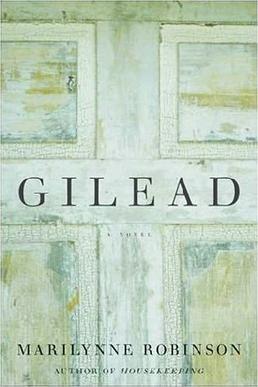
File:Gileadcover.jpg


The example that I have chosen as my topic for this post encompasses a few different kinds of awe. Two of the biggest themes of this book are, the beauty and splendor of nature and the wonder and joy behind the human experience, as well as the connection that we have with God. The story explores how everybody is connected through the shared experiences of life, and that we are all a part of nature. 
My example is the book Gilead, by Marilynne Robinson. It is the story of John Ames, and a collection of his memories that he's writing for his son. John is a pastor, like both his father and grandfather. The book chronicles his life, and describes how he was able to find God through the beauty of nature and in the actions of those around him.
As rife as this book is with references and observations about nature, this quote is my favorite. “The moon looks wonderful in this warm evening light, just as a candle flame looks beautiful in the light of morning. Light within light...It seems to me to be a metaphor for the human soul, the singular light within that great general light of existence.” The prose in this book is so poetic, and I think that this element adds to the wonder of this book. It certainly helps the reader feel the same kind of awe as John is experiencing. I also love how he ties a lot of his observations back to the human soul, and the inner light that we all have.  There are many instances when wonder is expressed at human nature or behavior. I love this quote from the book, as John brings up a point that all of us are familiar with, but never really think about. “It is an amazing thing to watch people laugh, the way it sort of takes them over. Sometimes they really do struggle with it . . . so I wonder what it is and where it comes from, and I wonder what it expends out of your system, so that you have to do it till you're done, like crying in a way, I suppose, except that laughter is much more easily spent.” The whole book is like this. John points out the most ordinary things about nature or humans, and he expresses the wonder that he sees in these simple acts or things. It's truly amazing. Another thing that he points out about human behavior is that, “These people who can see right through you never quite do you justice, because they never give you credit for the effort you're making to be better than you actually are, which is difficult and well meant and deserving of some little notice.” There isn't a whole lot that I feel like I can say. These quotes just say it all for me. I think that this book would be a great thing for Cara to look at, because while fictional, it's a great example of a person's memories that are filled with awe and wonder. 

"My Father Bleeds History": Awe in Maus

Maus is a two-volume graphic novel I read for the first proper English class I ever took, English 251: Foundations of Literary Criticism with Dr. Jamie Horrocks. Specifically, this graphic novel evokes awe through a first-hand account of the terrors of the Holocaust, and enhances that by playing with the disconnect of discussing such a serious topic in a medium that is usually so lighthearted and so far removed from reality.

One thing the book especially focuses on is awe at the lengths humans will go to survive. One particularly touching and astonishing sequence is when the author's father (the book is actually a memoir of the author/artist's father's true story) is separated from his wife and sacrifices everything to find her again.

"I traded my things to have gifts," his father says. "...We went, sometimes by foot, sometimes by train. One place we stopped, hours, hours, and hours...I couldn't find my friend and my luggage. I had only my thin shirt and my water. Shivek went back to Hannover to find me again...But I went only straight to Poland. It took 3 to 4 weeks."
A page from Art Spiegelman's Maus

The author is in awe of his father's resilience and the lengths he went to in such terrible conditions to be reunited with his mother. There is a kind of reverence expressed but yet not quite expressed throughout the work, and especially at this part as the acts of courage and love go beyond the author's ability to truly appreciate, and he knows it. The awe effect is enhanced by the fact that these are personal stories told face to face from father to son--an idea that relates to +Greg Bayles's project. In a way, the whole work is the recognition that Spiegelman's father's experiences are greater than he'll ever really understand and no medium can really capture them, and so in recognition of that he chooses to at least do something to try and honor his father, and so he does what he can, he writes and illustrates a graphic novel about it. People might react with shock and awe at the audacity of depicting such a tragedy in a medium associated with superheroes and cartoons, but part of the message of the work is that experiences like these are so awesome that no artistic medium can do them full justice. But any quality artistic representation makes it memorable, and that's what matters: remembering that humans are capable of all that the Holocaust was--on both sides.

List of Classes and Titles of Awe

I know we didn't have to do a post on this part, but this is just the easiest way for me to do it. So here it is.

Writing 150 - The Great Divorce by CS Lewis. Awe at glory of God and majesty of Heaven.
English 251 - Maus by Art Spiegelman. Awe evoked through horror of the Holocaust and the surprise of such a serious topic covered in the form of a graphic novel.
English 291 - Beowulf. Awe evoked through supernatural monsters and seemingly insurmountable odds presented to the hero--and how he overcomes them.
English 300R - The Tempest by William Shakespeare. Awe evoked through power of nature and supernatural powers of magic, as well as power of young love.
English 292 - Arcadia by Tom Stoppard. Awe evoked through the forces of disorder in the universe.
English 293 - "The Cathedral" by Raymond Carver. Awe evoked through the new experience of drawing with a blind man to teach him what a Cathedral looks like.
English 295 - "Araby" by James Joyce. Awe evoked through the boy's obsession with the girl and her beauty.
English 382 - King Lear by William Shakespeare. Awe evoked through madness of the king and the depth of tragedy.
English 218R - "Before the Law" by Franz Kafka. Awe evoked through epiphany of the character.
English 326 - Moby Dick by Herman Melville. Awe evoked through terror and obsession over the singular and legendary white whale
English 337R - The Man Who Was Thursday by G.K. Chesterton. Awe evoked through power of Sunday (the character) and epiphany/confusion of characters at the end.
English 361 - "The Cask of Amontillado" by Edgar Allan Poe. Awe evoked through passion and drive for revenge, terror of living burial.
English 373 - "Upon the Hurricane" by Anne Finch. Awe evoked through ultimate power of nature.
English 365 - The Left Hand of Darkness by Ursula K. Le Guin. Awe evoked at facing the powers of nature and the powerful bond between two people struggling to survive.

Wednesday, February 19, 2014

Humility in Awe

When we experience humility in awe, we take a moment to think about things we cannot fully understand. The complexity of life and death can often humble us or bring us to stand on a threshold of things we do not fully comprehend. This idea is evident in James Joyce's Dubliners short story "The Dead."

Towards the end of the short story, Gabriel Conroy goes to a hotel with his wife hoping to share a romantic night together. He recalls an entire list of memories of their past that, for him, are some of the most important moments in their relationship. When Gretta (his wife) emotionally recounts the story of a former and deceased love interest, it's clear to Gabriel that his marriage hasn't been what he might have wished. In this sobering moment, he thinks about the dead and their ties to the living.

"Generous tears filled Gabriel's eyes... His soul had approached that region where dwell the vast hosts of the dead. He was conscious of, but could not apprehend, their wayward and flickering existence. His own identity was fading out into a grey impalpable world: the solid world itself, which these dead had one time reared and lived in, was dissolving and dwindling."

James Joyce calls this "the epiphany" - the moment when a character goes through something that becomes manifest, or there is a deep realization that changes their self or world view (awe too as been associated with a transcendent moment, a spiritual or secular realization moment). Where Gabriel had earlier made a division between the past of the dead and the present of the living, he now humbles himself and recognizes the lines between life and death are blurred. He sees himself "flickering" in the place where the living and dead meet. Michael Furey's memory lives on in Gretta's life. As Gabriel looks out of the window at the snow, Joyce continues to blur the lines between life and death.

Creative Commons 2.0 License
Dean Molyneaux / geograph.ie
Ballynahinch, City Republic of Ireland
"A few light taps upon the pane made him turn to the window. It had begun to snow again. He watched sleepily the flakes, silver and dark, falling obliquely against the lamplight... It was falling on every part of the dark central plain, on the treeless hills, falling softly upon the Bog of Allen and, farther westward, softly falling into the dark mutinous Shannon waves. It was falling, too, upon every part of the lonely churchyard on the hill where Michael Furey lay buried. It lay thickly drifted on the crooked crosses and headstones, on the spears of the little gate, on the barren thorns. His soul swooned slowly as he heard the snow falling faintly through the universe and faintly falling, like the descent of their last end, upon all the living and the dead."

Joyce uses this epiphany moment for the character as an epiphany moment (or a humbling-awe experience) for readers as well. Furey's grave is being covered in snow, just as the snow covers those living. Life and death is "covered in snow," but the difference is this: will we be remembered after death? We are humbled to think that the memory of someone dead could be stronger than the memory of someone alive.

This reminds me of +Jane Packard's research on awe vs pragmatism. She discusses how Wordsworth wrote his poetry in "awe-land." His experiences with awe are in literature and daffodils where pragmatism and death are the end of awe. Joyce blurs the lines of life and death, exploring the idea that death can provide more life because of living memories (like Furey's life in Gretta's memories), where our pragmatic lives can become mundane and perhaps meaningless (like Gabriel's life).

Monday, February 17, 2014

More Examples for Andrew, Plus Some Questions

I'm not sure how much +Andrew Perazzo's last post works into his overall topic of Brandon Sandersen and Awe, but I figure it couldn't hurt to give him a couple more examples of how sci-fi has inspired real-world research and discoveries.

1-Genetic Memory
This video was one +Greg Bayles sent to me me last semester about how a study confirmed that at least some kind of "memory" indeed can be passed through genes, an idea made popular in the fiction of the Assassin's Creed vidoegame series.

I asked the question then, and I'll ask it again now. Would that study have been done if that idea wasn't already popular because of Assassin's Creed and other works of fiction that have played with the idea? Is one functional aspect of awe in fiction to inspire us to create more awesome reality?

2-Tablet Computers
Long before the iPad, people saw this on their TV screens all over America:

A "tablet" in Star Trek: The Next Generation

Now, ironically, thousands of people watch those shows on devices that look eerily similar. It might sound like a silly question, but is part of the iPad's success because it's the closest to what sci-fi promised us? There were tablet computers before the iPad, believe it or not, and arguably much more productive and feature-rich ones. But the iPad won in design, and fulfilled people's dreams more fully.

It was a kind of tragedy for me when I saw Mission Impossible: Ghost Protocol and half of their awesome futuristic gadgets were either run by iPads or were just iPad apps. Can we seriously not think of anything cooler, even in fiction? Do we need a new wave of sci-fi/fantasy writers to push the limit again to inspire real-world innovation?

3-Consumerism

This one's different, but super important to me. Aldous Huxley predicted in Brave New World 1931 (1931!) that in the future "...all country sports shall entail the use of elaborate apparatus. So that [people] consume manufactured articles..." Reading it that way, it sounds ridiculous--all you need to play soccer is a ball! How terrible to defile sports with such blatant consumerism! But what does it take to play soccer today? Ball, pads, jersey, shoes, membership fee to a team or whatever, travel expenses (nailed it, Huxley!), and on and on. Even running today requires $200+ shoes, special non-chaffing shirts (protect your nipples!), brand-name energy boosting this and that, and on and on.

Reading Brave New World in its own time caused awe at the thought of a future that could ever possibly be like that. Reading Brave New World today inspires awe because in so many ways the world has become like that.

So, the question arises, what are science fiction and fantasy writers saying about the future today? Should we be paying more attention? Is awe, at times, meant also to warn, or to instruct?


There's some stuff, Andrew. Hope it helps!

Wednesday, January 29, 2014

Catching Me

Wikipedia Images Creative Commons
If you really want to hear about it, the first thing you'll probably want to know is where I was born, and what my military childhood was like, and how my parents were stationed in different countries from me, and all that military brat kind of crap, but I don't feel like going into it, if you want to know the truth... I'm not going to tell you my whole life or anything. I'll just tell you about this madman stuff that happened to me around freshman year of high school just before I got pretty run-down and had to start reading books to take it easy and not think about life so much.

I had people telling me all the time in high school, telling me how when they were in college it was the happiest days of their lives, and giving me a lot of advice for the future and all. Boy, did they depress me! I don't mean any of them were bad people or anything. They weren't. But you don't have to be a bad guy to depress somebody - you can be a good guy and do it. All you have to do to depress somebody is give them a lot of phony advice about the future while you're working your boring jobs that weren't your dream jobs. That's all you have to do. I don't know. Maybe it wouldn't have been so bad listening to them if they didn't look so sad. They all look so sad when they think people aren't looking. The whole time they put on a good show, tell you everything is good and all, that the world is at your door step or something. I can't explain. I just didn't like anything that people were telling me.

"You don't like anything that's happening." It made me even more depressed when I thought about that.

"Yes I do. Yes I do. Sure I do. Don't say that." Why did you say that to me?  Of course I like some things...

Tuesday, January 28, 2014

My Girl Em

I say this all the time but....
I always tell people that I chose to teach English
because literature holds a power within us.

It is this power that always helps me come to terms 
with life,
with struggles,
with my mind's worries.

Take this for example:

A Brief Wondrous Personal Narrative

My senior year of high school was a time of serious literary exploration, perhaps the most serious and defining of my life. I, like any high school kid, I think, was looking for something greater to connect with, something to latch on to and make my purpose and meaning in my life that could lead to a meaningful career and unique perspective.

Literature had long been my source of epiphany, escape, and enlightenment, and I was positive some piece of literature would contain my answers. I had read many of the "classics," but I felt a particular need to be true to my own generation--to know what was going on now in literature, to help the world takes its next steps rather than just focus on the past. A book or short story or poem just didn't seem to really count to me if it was older than five years. The world was changing and I needed to know how literature was changing with it.

But school is seldom about what's going on outside its walls, especially high school, and there were no contemporary literature courses available for me to take, so I was forced to find my own way into the scary and chaotic world of contemporary literature.

I figured award winners were the easiest and obvious answer to point me in the right direction. And that's when Oscar Wao fell into my lap. Having won the Pulitzer prize that same year, I figured it was a sure bet for a good perspective on how literature was in my own time.

I opened the cover to find the epigraph:

"Of what importance are brief, nameless lives...to Galactus??"
 Fantastic Four, Stan Lee and Jack Kirby (Vol. 1, No.49, April 1966)

Learning to Walk in the Dark

I don't remember the exact moment I checked out The Screwtapes Letters by C.S. Lewis from the BYU library, but I do remember why I checked it out. I was lost. I had reached a crossroads in my life, and I wasn't sure which direction I should go. Things that I had taken for granted, ideas that I had assumed were unchangeable, had all come crashing down around me and I was left staring at the rubble, trying to remember how to build it back up again. I guess finding this book was God's way of giving me the first few pages of the instruction manual.

He will set them off with communications of His presence which, though faint, seem great to them, with emotional sweetness, and easy conquest over temptation. 
While piles of homework stood neglected on my desk, I laid on my bed in my cramped apartment and held this book above my face, turning the pages as fast as I could read. I wanted to understand this moral game that everyone told me I was a part of. I wanted to understand why I continued to progress and then digress, despite clear "communications of His presence," which seemed "great" and provided "easy conquest over temptation" but always seemed to fade eventually and I would once again be left feeling alone, shouting angry words, and thinking that my existence was insignificant, left with only the whispering memory of what I had once felt.
But He never allows this state of affairs to last long. Sooner or later He withdraws, if not in fact, at least from their conscious experience, all those supports and incentives. He leaves the creature to stand up on its own legs–to carry out from the will alone duties which have lost all relish. 
But, ironic as it was, these letters written from one devil to another were helping me to understand the divine nature of God more personally than any other piece of literature I had read up to that point. It made Him real. It made everything real. It put life in a sort of perspective I hadn't considered before, a perspective I would have been less willing to accept had my paradigm cathedrals still stood fully intact. Thankfully, they were broken, and because they were broken they could be molded. I found the strength to take tiny steps into the darkness, "to stand up on [my] own legs," to believe that something was one way when everything seemed to be screaming at me that it was another. 
It is during such trough periods, much more than during the peak periods, that it is growing into the sort of creature He wants it to be. Hence the prayers offered in the state of dryness are those which please Him best. 
I began to gain a deeper understanding of "trough periods." I began to understand their necessity and benefits, their power and the lessons they held within their sometimes torturous depths. I began to understand that God is sometimes silent, that he doesn't always blow his trumpet, forcing us to acknowledge Him and His power, because He doesn't want children who are forced to come to his lap. He wants children who choose Him. Willingly.
We can drag our patients along by continual temptations, because we design them only for the table, and the more their will is interfered with the better. He cannot 'tempt' to virtue as we do to vice. He wants them to learn to walk and must therefore take away His hand; and if only the will to walk is really there He is pleased even with their stumbles. 
Agency. That was what it all came down to. The more I came to understand that temptations are designed "only for the table," only for the limited and fleeting pleasure that comes from indulging appetite, the more I understood how profoundly God loved me. I realized He wants me to "learn to walk" because it is what I need. Even though it may require all of his self-control to keep His hand at bay, to let me fall on my face and cry, to get up only to stumble againHe does it. And "He is pleased even with [my] stumbles."
Do not be deceived, Wormwood. Our cause is never more in danger than when a human, no longer desiring, but still intending, to do our Enemy's will, looks round upon a universe from which every trace of Him seems to have vanished, and asks why he has been forsaken, and still obeys. 
It was a simple and profound concept that struck me to my core. He is pleased even with my stumbles.The thought echoed in my mind and stayed there. It is there every time I come crashing down to my knees in prayer, weighed down with my own weaknesses. It is there to remind me whenever I am disappointed by others and find myself cursing their stumbles. It is there when I am tired and sad, searching for some sort of explanation or fragment of hope. It is there and it gives me hope. And I get up to try again.

Monday, January 27, 2014

Ten Awes

Here's my list in no particular order (with Goodreads links provided):

  1. Frankenstein by Mary Shelley - the created chasing after the creator with both hate and admiration, or how the created seek to imitate or overpower the creator (parallels to man and god)
  2. The Catcher in the Rye by JD Salinger - "Don't ever tell anybody anything. If you do, you start missing everybody;" "Certain things, they should stay the way they are. You ought to be able to stick them in one of those big glass cases and just leave them alone."
  3. The Invention of Hugo Cabret by Brian Selznick - "Maybe we are all cabinets of wonders;" idea of time "in the blink of an eye" and how each of us fits like a machine, weaving in and out of lives with reason
  4. Rebecca by Daphne Du Maurier - what is identity (no one knows the name of the narrator/main character, not even the reader)
  5. A Separate Peace by John Knowles - "I felt that I was not, never had been and never would be a living part of this overpoweringly solid and deeply meaningful world around me." Powerful statement, for how can we compare in the perspective of the world?
  6. The Great Gatsby by F Scott Fitzgerald - I have never read a more beautiful description of a smile and the emotions one smile can cause for a person receiving it
  7. Fahrenheit 451 by Ray Bradbury - "Stuff your eyes with wonder, he said, live as if you'd drop dead in ten seconds. See the world. It's more fantastic than any dream made or paid for in factories." Can you experience awe in dreams? The concept of a world without books is mind boggling. Even if I'm not personally a heavy reader, the world would crumble without the written word.
  8. Anthem by Ayn Rand - the power of "we" or "I"
  9. Welcome to Night Vale (podcast by Joseph Fink and Jeffrey Cranor) - the strangest thing I've ever had the absolute pleasure to experience; a quote from episode 39 The Woman from Italy: "Usually, after the weather, I am here to tell you about how we have been saved from some world-ending danger that, for whatever reason, has failed again to end our world. But today, I have no such report because there is no such danger. Or, there is an infinitude of such dangers. Rocks hurdling unseen from space, gamma ray bursts created by chance and utterly destroying by chance, disease, war, hunger, or the slow dissipation of it all - not by the sudden, but by the gradual always. But now is not the time for such light-hearted childish thoughts."
  10. Sea Wall (play written by Simon Stephens) - I will never shut up about this play because it's beautifully written and executed; three stories woven together and told by one character directly to you; "He says to me one time, he looks at me and he says, 'He's in the feeling of water. Sometimes there's the shape of the roll of land. He's in the way some people move. He's in the light falling over a city at the start of an evening. He's in the space between two numbers."

Sunday, January 26, 2014

Awesome Literature

This list in chronological order of my first experience with each work. The colors of the title are just colors that have come to reflect those works in my mind for reasons I do not always understand (but probably just because of their covers).


  1. The Squire, His Knight, and His Lady by Gerald Morris. This book literally caused puberty in me and is the direct cause for the first moment I realized I was in love with a girl. And even today I think this series has the most believable, human characters in all of literature.
  2. The Castle of Llyr by Lloyd Alexander. Part of the Prydain Chronicles (The Black Cauldron Series), this book is the first time I ever felt the awful sting of betrayal, and realized the true power of human relationships.
  3. "The Wind" by Ray Bradbury. Really all of Ray Bradbury showed me a new world of the possibility of language, but this story in particular has stayed most with me as causing the kind of awe Edmund Burke talked about that is so wrapped up in terror.
  4. Outliers by Malcolm Gladwell. Not literature, but still words that opened up an entire new paradigm of how the world works. This book left an impression that continues to shape my worldview today.
  5. Brave New World by Aldous Huxley. The astoundingly accurate reflection of my world that was written over 70 years before it happened.
  6. "The Year of Silence" by Kevin Brockmeier. A familiar idea taken to surreal extremes turned in on itself to bring about a simplistic message in an unforgettable way. The first time form mattered to me in literature.
  7. The Brief Wondrous Life of Oscar Wao by Junot Diaz. The struggle of a genius I could appreciate against immorality I perhaps shouldn't have tolerated ending in "The beauty! The beauty!" that spoke to me in a way no other book ever has.
  8. "A Small Part" by Stephen Dunn. My late adolescence explained to me in a poem by a man I've never met.
  9. The Curious Incident of the Dog in the Night-time (play seen at British National Theatre). A play I literally stood through that turned me to hug another dude next to me in tears at the end. "Does that mean that I can do anything, Siobhan? Does that mean that I can do anything? The two look at each other for awhile. Lights black."
  10. The Left Hand of Darkness by Ursula K LeGuin. Currently reading this for my American Lit 1960-Present class. Proof that there's still plot premises out there beyond anything I've ever even imagined, blended with philosophy I must have been secretly yearning for based on how strongly I've reacted to it.