What started out as a simple idea of how Sanderson was awesome has expanded into whole new solid foundations. Let's start at the beginning.
So my first main idea was how Sanderson used epiphany, and that that's what made his works so wonder-filled. My wonder-kamen was all about that, and I received comments from my classmates on how I needed to give a backdrop of what epiphany really meant and how that dealt wit awe before I brought Sanderson into it and complicated matters. So for my second version I talked more about the genre of fantasy and hard fantasy. I showed this to someone outside of our class, and he gave me suggestions on how I could define certain words (like duex ex macina) and he really helped me clarify what I really wanted to say.

Showing posts with label posted by Andrew. Show all posts
Showing posts with label posted by Andrew. Show all posts
Tuesday, April 15, 2014

Wednesday, April 9, 2014
Vetting Perspective Venue for my paper on Sanderson and Awe
- Venue Research and Reading Report
"In preparation for submitting to Criterion magazine, I skimmed the following two articles : "Magnifying the Works of God," and "This Earth, Hot like Burning Coals." Benzan, Sarah. "This Earth, Hot like Burning Coals." Criterion (2013): 2012. Provo: BYU Press. Print. Lassetter, Katherine. "Magnifying the Works of God." Criterion (2013): 2012. Provo: BYU Press. Print. - Venue Title and Sponsoring Organization
This is not a conference and there is no supporting organization (except, perhaps, BYU). Here is the web page for their home page: Criterion Home Page. - Call for Papers and Dates (for submission, and for event/publication)
The link to the page: Due date for Paper. The date is April 25, 2014.
Monday, April 7, 2014
Fantasy, Awe, Sanderson, and Paper version 1.0
Yes, it is a thing of beauty. I still have many more quotes which I want to incorporate into this paper, but don't know where yet. I'm putting this on the blog as is because it's almost midnight. My version 2.0 will be even better, incorporating new quotes, elaborating on points, and polishing up the paper.
If any of you are interested in reading or skimming my paper, I have created a link:
Portal to my Epic Fantasy Paper about Epic Fantasy and Brandon Sanderson
I still need to make it a bit longer too. Enjoy!
If any of you are interested in reading or skimming my paper, I have created a link:
Portal to my Epic Fantasy Paper about Epic Fantasy and Brandon Sanderson
I still need to make it a bit longer too. Enjoy!
Wednesday, April 2, 2014
Two querys, by Andrew, on the project and the paper
Two letters:
Sent: A letter to Seth, who works at Mayday Games game company.
Sent: A letter to Seth, who works at Mayday Games game company.
Monday, March 31, 2014
Updated Audiences for Memoir
Social Proof
At the BYU English Symposium, there was a panel title "Memoir: Unlocking Identity and Memory through Narrative Style." Although I was unfortunately unable to attend the panel, I plan on contacting some of the presenters to read copies of their papers. I have a class with Lisa Roylance, the girl who presented the paper "The Importance of Memory Holes in Memoir," so I'm planning on asking her tomorrow about it. Judging by the titles of the papers, I think these will be really helpful to collaborate with as I continue structuring my paper.
Paper Venue
As far as publishing my paper goes, I'm thinking I'll just go with the 1966 Journal. I'll probably submit to a few other journals, too. But right now I'm think that I won't go the blog publishing route. I think my paper is getting too long/academic to be well-suited to that type of format. Even though blogs are a sort of memoir and it might be interesting for bloggers to read about why exactly they find blogging to be so fascinating, I think the very nature of blogs (simplicity and brevity) would cause them to reject anything near an academic paper.
At the BYU English Symposium, there was a panel title "Memoir: Unlocking Identity and Memory through Narrative Style." Although I was unfortunately unable to attend the panel, I plan on contacting some of the presenters to read copies of their papers. I have a class with Lisa Roylance, the girl who presented the paper "The Importance of Memory Holes in Memoir," so I'm planning on asking her tomorrow about it. Judging by the titles of the papers, I think these will be really helpful to collaborate with as I continue structuring my paper.
Paper Venue
As far as publishing my paper goes, I'm thinking I'll just go with the 1966 Journal. I'll probably submit to a few other journals, too. But right now I'm think that I won't go the blog publishing route. I think my paper is getting too long/academic to be well-suited to that type of format. Even though blogs are a sort of memoir and it might be interesting for bloggers to read about why exactly they find blogging to be so fascinating, I think the very nature of blogs (simplicity and brevity) would cause them to reject anything near an academic paper.
Wednesday, March 26, 2014
Cosmere game introduced by Andrew Perazzo
After messing around with Final Cut Pro and Facebook for far too long, I finally managed to get this video out.
Please note that this video isn't really part of my final project, it is just introducing you to my final project, showing and telling you the main elements of the game, and concluding with just one of the many reasons this game evokes awe.
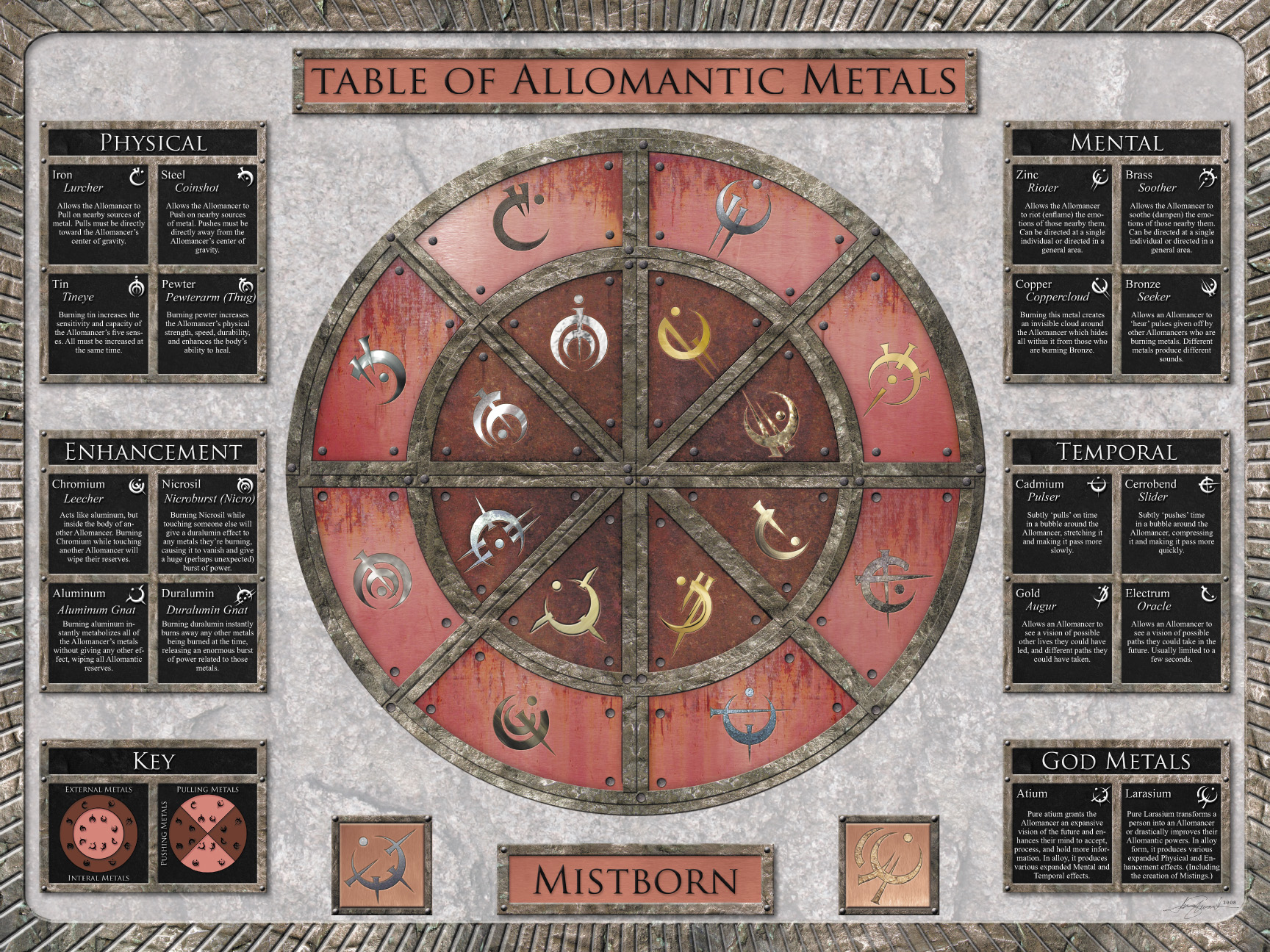
There are other elements of awe to this game than just the one mentioned in the video of course. A lot of these will be explained at the back of the rule book, which will also have references to my final paper, pulling the two together. For example, one way this evokes awe is by using the same sort of magic system building that Sanderson uses. The systems are very structured and organized, in this case into four sections. Two of them need outside cards to perform magic (allomancer, Elantrain), two do not. Two decks have power specific people (allomancer, surgebinder), two decks everyone can do everything. When taken as a x- and y- axis, these four decks fit nicely onto a little grid, kind of like how Mistborn's metal system fits nicely onto a graph. My instructions for the game will explain all this, and point out certain elements of Sanderson's own style that evoke awe.
Tuesday, March 25, 2014
part of my paper, where Sanderson's sense of epiphany is analyzed in context
A working draft of part of my paper. I hope to expand each explaining section so that the quotes illustrate different aspects of awe that Sanderson evokes.
Thursday, February 27, 2014
The Intricacies of Language
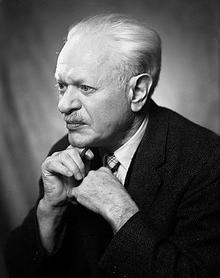
Kenneth Burke was a literary theorist, who had a powerful impact on 20th century criticism, rhetoric, and so forth. He analyzed the nature of knowledge and of language. Creative commons license.
As a starting basis, Burke believes that when we think, we use images, or symbols. More on that later. Burke believes that we have two main planes of thought: an absolute plane, where everything is absolute and set, and a conditional plane, where everything is fluid and there are no absolutes. What we do when we use figures of speech, then, is take these two planes and place them next to each other, connecting two ideas in a certain way to create a third new image, a completely separate idea. Burke claims (and no one after him has been able to disprove him) that all figures of speech can fit into four categories. These four categories are “metaphor, metonymy, synecdoche, and irony. And my primary concern with them here will not be with their purely figurative usage, but with their role in the discovery and description of ‘the truth’” (Grammar, 503). This “truth” that Burke speaks of is how we make sense of the world through language.
Monday, February 17, 2014
Response to Carly: Why are Musicals so popular?
I posted this question on my Facebook feed to see what sort of responses I'd get. I specifically asked the question as to why songs from Frozen are specifically popular, because that's all everybody's singing nowdays.
The link to this video shows you it has over 98 MILLION views!
The responses I got include, "I'm not sure," which isn't very helpful. But other responses were "They are so catchy!" and "because we all secretly wish we were in one and like west side story could sing and dance our life." Is this why we love musicals? Because they portray another reality, one where you can go crazy and sing your heart out, and no one would think it was weird like they would if you did that in real life? Maybe that element adds our wonder and our awe to musicals, because they encapsulate another completely different society, one where you can express your inner-most feelings through pure music and song. And music is one of the best ways to express your soul. Research studies have been done on this subject, such as "Deeper than Reason: Emotion and its Role in Literature, Music, and Art" by Jenefer Robinson.
To deal more with Carly's topic, I think that another reason music numbers in musicals invoke our wonder is because they encapsulate a specific moment in time for those characters. Like the above song from Frozen, the song allows the audience to better understand Elsa and her situation and her emotions that she's going through at that moment. Songs in musicals always further the plot along. Today we take this for granted, but it didn't always used to be that way. It started with Rogers and Hammerstein. They were the ones who wrote the now famous musicals Oklahoma, The King and I, and The Sound of Music. The revolutionized the musical industry but having the musical numbers not just be side shows to the main event, but had them be integral to the plot of the play itself. Because of this, songs from musicals now have an inborn history to them. In Wicked, each song has its own background and story, and it allows the meaning of the song to surpass much further than just the song itself. This, I think, can create a sensation of awe.
Friday, February 14, 2014
Science Fiction to Technology Reality and Vice Versa
It's amazing how many technological advances and ideas have come from science fiction. Science fiction writers have a duty to create cool new futuristic pieces of technology and concepts. Whether it be the internet, cell phones, or a new way to interact with computers, the ideas created by these authors have often shown up in the real world years later a,not just fantasy, but reality.
The opposite can be true as well: actual pieces of technology that have been developed and created in the real world have been capitalized by fiction authors. These authors write stories revolving around one particular technological advance, whether it be a completely computerized reality or using a real device in fictional circumstances, these authors know how to monopolize on concepts that culture thinks is cool and new.
The following 10 ideas show just some examples of how literature has affected reality and how reality has affected literature.
(1) Literature --> Reality: The Internet

Years before the internet was ever invented, David Brin, science fiction author, wrote the novel "Earth." In it, he describes a futuristic world where there is an interconnected computer network. Hmm, sounds kind of like the internet? You bet, its name is even the World Wide Web. But it gets better: it describes the web as the source for all news media, and predicts e-mail spamming and blogging. The best part, though? This line (emphasis added): "These are my subvocalizations, I suppose – the twitterings of data and opinions on the Net are my subjective world."
(2) Reality --> Literature: A Second Virtual Life
http://www.youtube.com/watch?v=Ik2_61longI
James Dasner has taken the idea of a complete virtual life and run with it. Last class we talked a bit about Second Life, a complete virtual world. Dashner takes this idea further and paints for us a picture in which "coffins" are used to put the person in a completely immerseive experience. The "coffin" causes all your physical senses to experience what you're doing in the virtual world. Rainy day? Yep, you can feel raindrops landing on you. Cold outside? Yep, you can feel that too. You can explore any real world location you want, as well as may not real ones. So, kind of like Second Life, only a lot better.
(3) Literature --> Reality: Robots
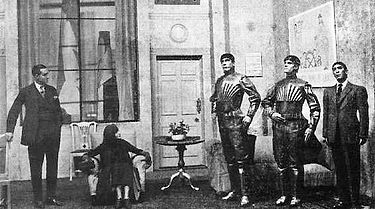
Do you know where we got the term "robot" from? If you said a work of science fiction, you'd be right. The word "robot' was first coined in Karel Capek's play R.U.R., which stands for Rossum's Universal Robots. The term 'robot' was used to denote the automata in the 1921 play.
(4) Reality --> Literature: Nanobots

Who wouldn't want to write a book about a swarm of super intelligent, microscopic killer robots? Or read a book about them? Michael Crichton, master at science, has written just that. This is a good example of how writers can take the popular ideas of science that are floating around in their day, and write a best-selling novel about that scientific idea. Other novels by Crichton that follow this same idea are Jurassic Park, which deals with cloning, and The Andromeda Strain, which deals with rapidly mutating viruses.
(5) Literature --> Reality: Cell-phones
http://mashable.com/2011/09/08/star-trek-gadgets/
Okay Trekkies, this one's for you. In the Star Trek show, the crew are often seen using small little pieces in their ears to communicate with one another. This idea eventually led to the formation of cellular phones, or cell-phones for short. Not only did the devices in Star Trek communicate with each other though, they could also do lots of other crazy things like warn the wearer of impending danger. Unfortuanlly, our cell-phones can't do that quite yet.
(6) Reality --> Literature: Complete Video Game Immersion
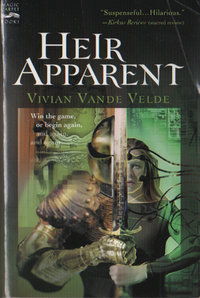
This idea is very similar to the "coffin" idea Dashner writes about, as mentioned in #2 of this post. Here, though, the idea isn't a free interactive world which is similar to real life. The idea here is to have just another video game, only make that as real as blooming possible. In Heir Apparent, Velde picks up on the idea of video games becoming more and more realistic, and proposes that in the future, all video games will be entirely immerseive. When you fight dragons, you can literally feel their fiery breath. I wonder how that would work for Mario games...
(7) Literature --> Reality: Holograms
(8) Reality <--> Literature: The Search for Extra-Terrestrial Life
(9) Literature --> Reality: Gesture based computer interaction
(10) Reality --> Literature: Anti-matter device
Thursday, January 30, 2014
Sanderson, scientific magic, and how literature creates awe
Kredik Shaw, from Mistborn

So, Brandon Sanderson is a fantasy author. Now, growing up I wasn't a big fan of fantasy. I was a big of science-fiction. What's the difference between these two? They are commonly lumped into one generic title: Science Fiction and Fantasy, but to me there are distinct differences. Fantasy, to me, was too nerdy and geeky. All the stories had dragons in them and all the hero's problems could be solved with a simple wave of a wand and a magic spell that was lost for centuries or something like that. Science fiction, on the other hand, had hard and fast rules for me. Everything crazy was a result of science and technology. Hard Science Fiction especially drew my interests, because they could explain everything using science, from the alien's biological makeup to how gravity was formed by a spinning motion. So Andrew, you may be asking yourself, how did someone with such a distaste of fantasy come to be a fan of the fantasy author Brandon Sanderson?
Wednesday, January 29, 2014
The First Hunger Games

Before the Hunger Games were even a stirring in the mind of Suzanne Collins, another deadly game of cat and mouse hit the scene of literature. In "The Hunger Games," humans are placed in a forest, and later jungle, paradise. But they aren't there to just take in the view. They are there to fight to the death. Man against man, human against human in a fight for survival. And for most, the odds are not always in their favor.
Now image a different book, one where our hero finds himself on a forest island. Where our hero isn't there just to take in the sights and sounds, but in a desperate race and struggle for survival. Sound familiar? Well, the work I'm referring to is none other than Richard Connell's work "The Most Dangerous Game."
Monday, January 27, 2014
Literature of the Sublime
Here are ten works that evoke a sense of wonder from me when I read them:
(1) The Book of Mormon. Cliche, I know, but the truth is that there's a special feeling I get every time I read it. It's the most powerful book out there that will help you feel the Spirit. Powerful, incredible stuff.
(2) The Mistborn Trilogy. Written by Brandon Sanderson, these books take place in his fictional universe called the Cosmere. Scientific magic reigns, as the main characters try to over through the evil Lord Emperor and then try to prevent the end of the world.
(3) Jurassic Park. Dinosaurs come to live in the real world. "Nough said.
(4) Nightfall. This short story by Ray Bradbury is a classic tale of another world where it is always light out due to several suns, and of the population that needs light to stay sane. But what were to happen if an event occurred that happened every thousand years . . . a complete solar eclipse of all suns when there is total darkness?
(5) Children of the Mind. The book "Ender's Game" was the first in a series of four books; this is the last. three different unique alien races, faster than light travel by traveling to the "Outside," and one person's essence occupying three bodies simultaneously make for a great read.
(6) The Prestige. The book that the film was based on. I like it because of the suspense and mysteries, even if several are already known because you've seen the movie.
(7) The BFG. One of my favorite Rhold Dahl books. My favorite scene is where the BFG goes out to hunt for dreams and collects them and puts them together to give to children while they sleep.
(8) Catch-22. Weird, zany novel. For me, it's the wacky characters and situations are what produce the sublime.
(9) Bless Me, Ultima. The book I shared in class. A young boy struggles growing up and he has to decide between the supernatural which he is accustomed to and Christianity. The crazy dream scenes are the best.
(10) Elantris. The second work on this list by Brandon Sanderson, but I think that's okay because I'm planning my Wonder (final paper) to be about him and his books. In this book, magic is produced by writing specific symbols in the air. Depending on the shape of the symbol depends on what it does.
(1) The Book of Mormon. Cliche, I know, but the truth is that there's a special feeling I get every time I read it. It's the most powerful book out there that will help you feel the Spirit. Powerful, incredible stuff.
(2) The Mistborn Trilogy. Written by Brandon Sanderson, these books take place in his fictional universe called the Cosmere. Scientific magic reigns, as the main characters try to over through the evil Lord Emperor and then try to prevent the end of the world.
(3) Jurassic Park. Dinosaurs come to live in the real world. "Nough said.
(4) Nightfall. This short story by Ray Bradbury is a classic tale of another world where it is always light out due to several suns, and of the population that needs light to stay sane. But what were to happen if an event occurred that happened every thousand years . . . a complete solar eclipse of all suns when there is total darkness?
(5) Children of the Mind. The book "Ender's Game" was the first in a series of four books; this is the last. three different unique alien races, faster than light travel by traveling to the "Outside," and one person's essence occupying three bodies simultaneously make for a great read.
(6) The Prestige. The book that the film was based on. I like it because of the suspense and mysteries, even if several are already known because you've seen the movie.
(7) The BFG. One of my favorite Rhold Dahl books. My favorite scene is where the BFG goes out to hunt for dreams and collects them and puts them together to give to children while they sleep.
(8) Catch-22. Weird, zany novel. For me, it's the wacky characters and situations are what produce the sublime.
(9) Bless Me, Ultima. The book I shared in class. A young boy struggles growing up and he has to decide between the supernatural which he is accustomed to and Christianity. The crazy dream scenes are the best.
(10) Elantris. The second work on this list by Brandon Sanderson, but I think that's okay because I'm planning my Wonder (final paper) to be about him and his books. In this book, magic is produced by writing specific symbols in the air. Depending on the shape of the symbol depends on what it does.
Saturday, January 18, 2014
The Eternity of Time and Space
I asked a question about Eternity: Can man fully comprehend it? If not, how close can we get? In general, how good are we really at comprehending really large numbers? In the following comic strip, a man simulates an entire universe just creating a computer made from rocks. How long would it take him to do this? How long would it take him to simulate one second of his universe? My guess is far more than we as humans can comprehend. So when we think about the infinite nature of time, it can overwhelm us and give us a sense of awe. My good friend Sister Holt commented on my Facebook page that these are good questions, but what were the answers? That's the catch--maybe we'll never know.
.png) We as humans have troubles with really really big numbers. In the United States government, for example, the politicians keep mixing up the words "millions," "billions," and "trillions." They all pretty much mean the same thing to them, although one is thousands of times greater.
We as humans have troubles with really really big numbers. In the United States government, for example, the politicians keep mixing up the words "millions," "billions," and "trillions." They all pretty much mean the same thing to them, although one is thousands of times greater.
It's not just time, but space too can be seen as infinite. Imagine God creating an unlimited amount of worlds. So far we haven't been able to see life anywhere else in the Universe. So the previous life God created elsewhere in the cosmos is really far away. Not only that, but there are thousands upon millions of other worlds out there, greater than the sands of the sea. So how much space would be needed in space to house all these planets sufficiently far away from one another? A lot? Say, infinite? Just thinking about the vastness of the universe evokes a sense of awe in me.
And it just isn't the eternity of bigness that causes our minds to blow up, there is also the eternity of smallness. How small is the smallest particle? An atom? Nope. A quark? Nope, but getting closer. Is there a real end to how small matter can be taken apart? Tessellations are a good example of that. How far into the tessellation can you go? Into infinity--you can never stop.
It's true with all of eternity and infinity that we as mortal beings won't be able to comprehend them in this life time. But that's why we'll have an eternity to figure it out. ;)
It's not just time, but space too can be seen as infinite. Imagine God creating an unlimited amount of worlds. So far we haven't been able to see life anywhere else in the Universe. So the previous life God created elsewhere in the cosmos is really far away. Not only that, but there are thousands upon millions of other worlds out there, greater than the sands of the sea. So how much space would be needed in space to house all these planets sufficiently far away from one another? A lot? Say, infinite? Just thinking about the vastness of the universe evokes a sense of awe in me.
And it just isn't the eternity of bigness that causes our minds to blow up, there is also the eternity of smallness. How small is the smallest particle? An atom? Nope. A quark? Nope, but getting closer. Is there a real end to how small matter can be taken apart? Tessellations are a good example of that. How far into the tessellation can you go? Into infinity--you can never stop.
It's true with all of eternity and infinity that we as mortal beings won't be able to comprehend them in this life time. But that's why we'll have an eternity to figure it out. ;)
Subscribe to:
Posts (Atom)